

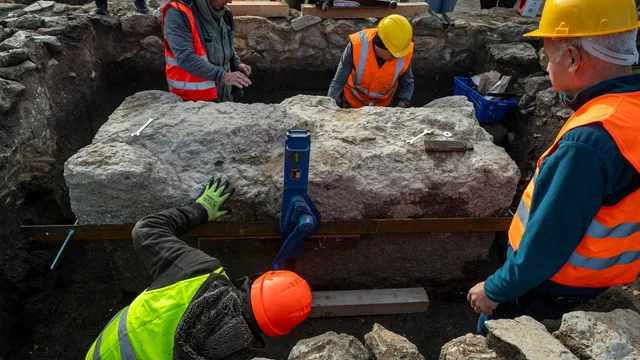
Ancient Roman sarcophagus unearthed in Budapest
Ancient Roman sarcophagus unearthed in Budapest
- A well-preserved Roman sarcophagus dating back 1,700 years was found during excavations in Budapest's Óbuda district.
- Archaeologists uncovered a complete skeleton along with many artifacts, indicating a careful and meaningful burial.
- The discovery provides insight into Roman customs and emphasizes the emotional connections people had with their deceased.
Story
In Hungary’s capital, Budapest, archaeologists made a significant discovery while conducting extensive excavations in the Óbuda district. They unearthed a remarkably well-preserved Roman sarcophagus that dates back approximately 1,700 years. This limestone coffin was found intact, sealed for centuries, and untouched by looters. It was located among the ruins of houses in a quarter of Aquincum, a once-thriving Roman settlement. As they carefully opened the sarcophagus, researchers revealed a complete skeleton of a young woman along with various artifacts that included glass vessels, bronze figures, and a collection of 140 coins. These objects were believed to be offerings from her relatives for her journey in the afterlife, honoring Roman funerary customs. Given the richness of the items, specialists suggested that the deceased likely belonged to a higher social status, indicating a careful burial conducted by her family. This site, which had previously been vacated in the 3rd century, also featured a Roman aqueduct and other graves, but none matched the significance of this sealed tomb. Furthermore, excavators noted a layer of mud within the coffin, leading to hopes that it might yield additional treasures, including potential jewelry, during further analysis. This discovery not only holds scientific value but also touches on the emotional aspects of ancient burial practices, showcasing the devotion and love families held for their deceased. The lead archaeologist, Gabriella Fényes, expressed her emotional response to the care taken in the burial, reflecting on the profound sense of loss that must have accompanied the burial of this young woman.


