

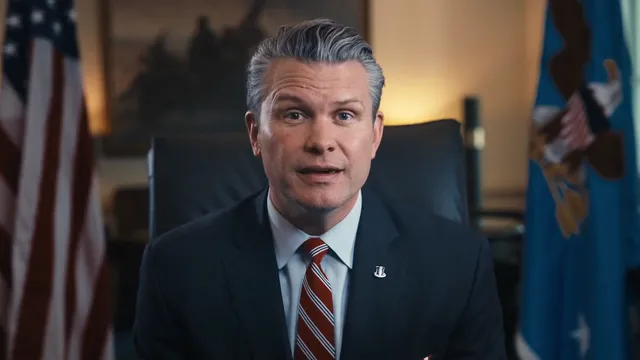
Pete Hegseth orders military colleges to eliminate 'wokeness' amid war in Iran
Pete Hegseth orders military colleges to eliminate 'wokeness' amid war in Iran
- U.S. Defense Secretary Pete Hegseth has ordered a review of military colleges to assess their educational focus amidst the escalating war in Iran.
- The review aims to ensure that curricula align with core national security issues and eliminate 'woke' content.
- This move reflects a broader strategy to reshape military education and training in accordance with more traditional military principles.
Story
As the conflict in Iran escalates, U.S. Defense Secretary Pete Hegseth has initiated a review of military colleges across the country. This review aims to evaluate whether the institutions are too focused on what Hegseth refers to as 'woke' principles. He stated that his primary concern is ensuring that officers receiving training are adequately prepared for military leadership roles, emphasizing the necessity of being aligned with core national security issues. The review will assess various senior service colleges, including the Army War College and National Defense University, in a bid to eliminate any curriculum aspects that stray from essential military education topics. The special task force assigned to this mission has been given a 90-day deadline to produce a report evaluating the effectiveness and focus of these colleges. Hegseth expressed his intent to see military leaders emerge as critical thinkers, grounded in the founding principles of the nation. He also highlighted that if civilian universities are deemed unfit for military training, the Department of Defense must take action to rectify this situation within its own educational institutions. This focus coincides with the 14th day of intensified U.S. military operations against Iran. During a recent press briefing, Hegseth addressed the ongoing military strikes, claiming that U.S. forces have hit over 15,000 Iranian targets, significantly weakening Iran's military capabilities, including its air defenses and missile technology. He painted a picture of Iranian leadership in disarray, suggesting they have resorted to hiding underground due to the overwhelming pressure from U.S. strikes. Hegseth characterized the conflict as a severe and unbalanced engagement, claiming the U.S. is delivering unprecedented blows to the Iranian military. The motivation behind this educational review appears deeply intertwined with the ongoing war and the current political climate. Hegseth's comments reflect a strong desire to move away from what he perceives as distractions within military training environments. The review is part of broader efforts to ensure that military personnel are conditioned to prioritize traditional military values over contemporary social ideologies. Many believe this could signal a significant shift in military education, focusing more heavily on aggression and preparedness while dismissing perceived liberal influences.
Context
The increasing prevalence of 'wokeness' within military training has led to considerable debate regarding its impact on the effectiveness and cohesion of armed forces. 'Wokeness' often encompasses an awareness of social justice issues, inclusion, and diversity, with proponents arguing that it fosters an environment that respects and values all service members. However, critics contend that an emphasis on politically correct terminology and concepts may detract from traditional military training priorities, such as discipline, readiness, and unit cohesion. Understanding the implications of this cultural shift requires a nuanced perspective that considers both the intended benefits and possible unintended consequences of introducing such ideologies into military training programs. Supporters of incorporating 'woke' principles argue that an inclusive military is not only a moral imperative but also a strategic advantage. They posit that diverse teams can enhance operational effectiveness by bringing varied perspectives and problem-solving approaches. This diversity can mirror the society that the military serves and protect, contributing to improved relations with civilian populations in multi-national operations and peacekeeping missions. Additionally, creating a more welcoming environment could help in recruiting and retaining talent from a broader demographic spectrum, thereby strengthening the overall military capacity. Conversely, opponents of a 'woke' approach in military training often express concern about its potential for creating division and distraction. They argue that excessive focus on social issues during training could undermine the primary goals of the military, particularly when service members are expected to operate in high-stress environments where unity and clarity of purpose are critical. Critics also frequently highlight instances where military personnel express their discomfort with mandated training sessions that prioritize social justice over combat readiness, suggesting a potential erosion of the essential warrior ethos that has historically defined military culture. Ultimately, the impact of wokeness on military training raises important questions about balance and effectiveness. It poses challenges for military leadership as they strive to create an environment that is inclusive while also maintaining the necessary focus on combat readiness and operational success. Future discussions about the military's training framework must carefully weigh these competing priorities, ensuring that while diversity and inclusion are championed, they do not come at the cost of the core values and competencies that have historically enabled the military to function at its best.


