

Judge halts White House demolition amid legal challenges
Judge halts White House demolition amid legal challenges
- A federal judge has blocked the demolition of the East Wing of the White House, citing lack of authority by the President.
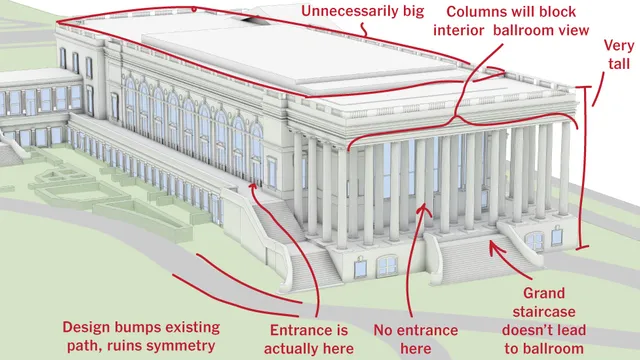
- Concerns about the proposed ballroom's design and its effects on the White House's historic integrity have been raised.
- The case highlights the importance of congressional approval for alterations to federally owned historical properties.
Story
In recent developments, a federal judge in Washington, D.C., has issued a temporary order to halt ongoing demolition of the East Wing of the White House. This ruling came after arguments were presented by the National Trust for Historic Preservation, indicating the possibility of a successful legal challenge against the authority the President claimed regarding these renovation plans. U.S. District Judge Richard J. Leon, appointed by George W. Bush, emphasized that the president serves as a steward for future generations rather than an owner of the White House, highlighting the historical significance of the property and the need for congressional approval for such measures. The controversy over the proposed ballroom addition to the White House has been ongoing, with plans for this significant structure surfacing months ago. The National Capital Planning Commission was preparing to approve the ballroom plans, a project that had been in discussions for over 150 years and was expected to proceed with construction starting in the spring if finalized. The ballroom, planned as a major addition to the presidential residence, has drawn criticism surrounding both its design and perceived overreach of presidential authority in altering historic buildings without appropriate legislative backing. In light of the judge's ruling, concerns have been raised over the scale and aesthetics of the ballroom relative to the existing White House architecture. Some observers have noted that it could disrupt the symmetry and historic appearance that defines the White House complex. Various stakeholders, including members of the National Trust for Historic Preservation, have expressed significant apprehension regarding the ballroom's design and its implications for the historic integrity of the White House. As the legal proceedings continue, the implications of this judicial order resonate beyond just the construction project itself; it raises broader questions about the powers of the presidency in relation to the national landmark that serves as a symbol of American history. The outcome of the legal battle could set important precedents regarding the preservation of historical sites and the scope of presidential influence on federal buildings.
Context
The National Trust for Historic Preservation is a nonprofit organization established in 1949, dedicated to preserving historic places across the United States. Its mission is to protect, maintain, and promote the cultural heritage of the nation, ensuring that future generations can appreciate the historical significance of various sites. The organization works collaboratively with local communities, governments, and preservationists to advocate for legislation that supports historic preservation, raise funds for preservation projects, and provide educational resources to encourage public engagement and awareness. Through various initiatives, the Trust aims to foster a deeper understanding of the importance of preserving our national heritage in a rapidly changing world. At the core of the organization’s mission is the belief that historic places tell the stories of our past and connect us to our cultural identity. The National Trust not only focuses on iconic landmarks but also emphasizes the importance of preserving ordinary sites that hold extraordinary meaning to local communities. By promoting a sense of place, the Trust encourages communities to recognize the value of their historical assets, whether they are historic homes, downtown districts, battlefields, or cultural landscapes. The organization highlights that preservation is not just about conservation; it is also about enhancing community vitality, attracting tourism, and supporting local economies by leveraging the unique character of these historic areas. One of the National Trust's key strategies is to engage in advocacy efforts at both the national and local levels. The organization actively lobbies for policies that provide funding and protection for historic sites, including tax incentives for rehabilitation, grants for preservation, and regulatory frameworks that safeguard these resources. The Trust also raises public awareness through campaigns and initiatives that highlight the significance of preservation, such as National Preservation Month, which celebrates preservation projects and encourages community involvement. By mobilizing grassroots efforts, the National Trust empowers individuals and organizations to become advocates for their local historic resources, fostering a culture of preservation nationwide. In addition to its advocacy and awareness efforts, the National Trust for Historic Preservation offers a wealth of resources to support preservation-related endeavors. This includes technical assistance, preservation research, and a comprehensive network of professionals who share best practices and innovative approaches to preservation challenges. The Trust's publications, webinars, and workshops provide crucial information to empower individuals and organizations who wish to undertake preservation projects. By creating a robust community of preservationists, the National Trust ensures that the mission of preserving America’s heritage continues to thrive, adapting to new challenges while upholding the values of history, culture, and community.


