

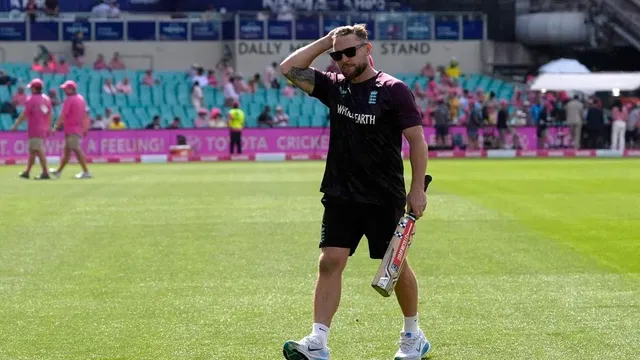
Harry Brook faces backlash after nightclub incident in New Zealand
Harry Brook faces backlash after nightclub incident in New Zealand
- Harry Brook was involved in an incident with a nightclub bouncer in New Zealand last year, which has resulted in significant media scrutiny.
- Despite the controversy, Brook has successfully led England to victories in Sri Lanka, showing tactical skill and resilience.
- England's performance in the upcoming T20 World Cup will be crucial for mitigating the negative attention surrounding Brook and the team.
Story
In recent months, the England cricket team and its captain Harry Brook have faced significant scrutiny due to a nightclub incident that occurred in New Zealand. On October 31, 2023, Brook was involved in an altercation with a nightclub bouncer during the team's tour. This incident emerged amid England's disappointing 4-1 Ashes defeat, igniting discussions about a perceived 'drinking culture' within the squad. Brook's altercation reportedly caused embarrassment to both him and the team, and he expressed regret over the matter. He has since apologized and acknowledged the responsibility that comes with being a captain. Head coach Brendon McCullum has publicly defended Brook, calling him a 'tough lad' who has managed to lead the team effectively despite the off-field issues. While Brook has indeed shown strong performance on the field, leading England to a series victory in Sri Lanka in early February 2024, the repercussions of the nightclub incident continue to cloud his leadership. McCullum emphasized Brook's intelligence and tactical abilities but also recognized the need for improved behavior off the field, highlighting the mental health challenges that players face in a demanding cricketing schedule. Moeen Ali, another senior player, pointed out that a successful run in the upcoming T20 World Cup could help combat the negative headlines surrounding Brook and McCullum. With the tournament starting in February in India, Ali has stressed the importance of advancing past the semi-finals to alleviate the pressure on the captain and coach. Brook's handling of the situation has garnered mixed reactions, and both he and the England management are keenly aware that public perception hinges on their performance in the World Cup. As the team prepares for their first T20 match against Nepal on February 8, 2024, the focus remains on Brook's ability to steer England through the challenges posed both on and off the field. The incident has not only tarnished Brook's reputation but has also brought forth a broader conversation about player conduct and the environment surrounding the team. As Brook aims to resolve his personal and professional challenges, he is reminded of the responsibilities that come with his role as captain. His teammates, including Will Jacks, have publicly expressed support, indicating a desire for unity as the team moves forward. With the backdrop of this controversy, the upcoming T20 World Cup represents a critical juncture for both Brook and McCullum in defining their legacy and overcoming the doubts that have arisen in recent months.
Context
economic impact analysis market impact geopolitical global trends strategic shift insight impact impact economic geopolitical global trends insight economic global global insight data economic geopolitical insight global market geopolitical global policy economic analysis strategic market economic policy shift global insight shift shift data shift data trends market impact economic trends strategic global policy shift geopolitical trends shift insight data market trends strategic geopolitical global trends data market insight geopolitical economic geopolitical market shift geopolitical impact analysis insight global market policy...


