

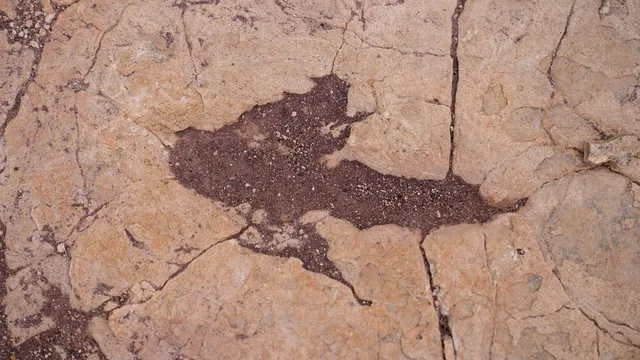
Scientists uncover the largest dinosaur footprint site in Bolivia
Scientists uncover the largest dinosaur footprint site in Bolivia
- Scientists discovered a large collection of dinosaur footprints in Bolivia, dating back over 60 million years.
- The findings showcase the behavior of various theropod dinosaurs and highlight exceptional preservation conditions.
- Ongoing research aims to understand why these dinosaurs congregated in this region, amidst threats from human activities.
Story
In central Bolivia, scientists discovered an extraordinary collection of dinosaur footprints, which date back over 60 million years. The research, led by Spanish paleontologist Raúl Esperante and co-authored by Roberto Biaggi, focuses on a site in Toro Toro, a village situated in the Bolivian Andes. This site has a remarkable number of theropod footprints, with estimates suggesting there are roughly 1,378 traces that showcase the behavior of dinosaurs during the Cretaceous period. These footprints were originally mistaken for those of mythical monsters, according to local legends. The combination of exceptional preservation and a high density of tracks provides a unique opportunity to study the lives of these ancient creatures. The footprints were formed when dinosaurs traversed muddy waterbeds, occasionally attempting to swim. Interestingly, scientists found a variety of footprint sizes, indicating that large theropods, some reaching up to 10 meters in height, roamed alongside smaller theropods that were merely the size of a chicken. The remarkable array of footprints suggests these dinosaurs may not have settled extensively in the region, but rather moved along an ancient coastal superhighway connecting what is now southern Peru with northwest Argentina. Despite the excellent preservation of footprints, the site's integrity faces threats from human activities, including agriculture and construction. Over the years, farming practices have disrupted the fragile ground where these footprints lay, putting the site at risk. Highway construction nearly eradicated a vital footprint area just two years before the publication of the recent findings. These disturbances may partly explain the scarcity of dinosaur bones in the area, as it is theorized that the methods of preservation favored the footprints rather than solid remains from these ancient giants. Ongoing research into this treasure trove of dinosaur tracks may shed light on the flocking behavior and environmental interactions of these creatures. Paleontologists have yet to determine why so many dinosaurs frequented the site. Theories range from the presence of a large, ancient freshwater lake nearby to the possibility of these animals escaping predators or searching for new habitats. As studies continue, the site in Toro Toro stands as a significant window into the behavior and lives of dinosaurs during a critical period in Earth's history, as they approached extinction due to a catastrophic event at the end of the Cretaceous.
Context
The study of dinosaur behavior through the examination of footprints provides vital insights into their movement patterns, social interactions, and ecological roles. Footprints, or ichnofossils, serve as a direct link to the activities of dinosaurs, as they offer concrete evidence of where these creatures roamed, how they traveled, and potentially even aspects of their behavior and social structures. By analyzing the size, depth, and spacing of footprints, researchers can infer not only the size and weight of the dinosaur but also the speed and manner of its movement. These interpretations are crucial, as they allow paleontologists to piece together behavioral traits and environmental adaptations of long-extinct species, forming a clearer picture of their life on Earth millions of years ago. Additionally, the study of dinosaur footprints can shed light on social behavior. Grouping of footprints can indicate herding behavior or social structure among certain species. When footprints overlap or show signs of interactions, such as irregular patterns of movement, it may suggest social dynamics such as pack hunting or parental care behaviors. Furthermore, the discovery of diverse trackways in close proximity can imply the presence of multiple species within the same habitat, allowing researchers to speculate on how these species might have coexisted or interacted. By understanding these social networks, we gain better insights into the complexities of prehistoric life and their ecological relationships. The physical conditions under which dinosaur footprints were formed are also of significant interest. Coupled with geological data, researchers can use footprints to assess the paleoenvironment. The sedimentary context of the footprints provides clues concerning climate conditions, such as wet or dry periods, and how these conditions influenced dinosaur activities. Variations in sediment types may suggest dinosaurs were roaming through different environments—such as marshlands, deserts, or forested areas—emphasizing how adaptable these creatures were. Thus, ichnology, the study of traces left by organisms, not only enriches our understanding of the animals themselves but also enhances our comprehension of the ecosystems they inhabited. Ultimately, examining dinosaur footprints transcends mere curiosity; it serves as a crucial tool in reconstructing past ecosystems and understanding evolutionary processes. The interdisciplinary approach that combines geology, biology, and environmental science has led to significant advancements in paleontology, allowing scientists to formulate hypotheses that were once considered mere speculation. As new technologies and methodologies develop, the insights garnered from dinosaur footprints will continue to provide invaluable contributions to our comprehension of these majestic creatures and their world.


