

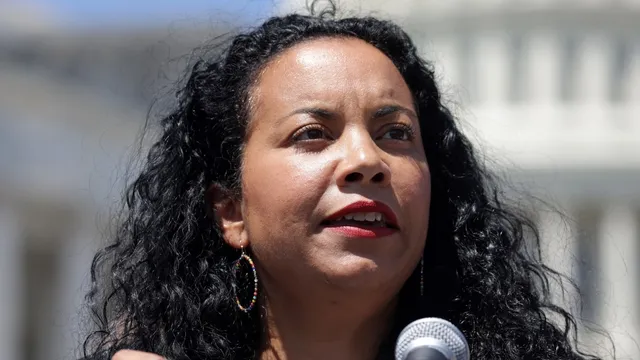
New Jersey's primary election tests Democratic machine politics
New Jersey's primary election tests Democratic machine politics
- A special primary election was held in New Jersey's 11th District on February 5, 2026, to fill a vacant House seat.
- Several candidates were competing, representing various Democratic factions backed by different county organizations.
- The election outcome could influence the future direction of the Democratic Party at a national level.
Story
On February 5, 2026, New Jersey held a special primary election in its 11th District to fill a House seat vacated by Democrat Mikie Sherrill, who was elected governor. This election was particularly significant as it involved various factions within the Democratic Party competing for influence over the future of the party, utilizing substantial financial resources from interest groups and super PACs. The 11th District had historically leaned Democratic, with Joe Biden winning the area by nine points in the presidential election and Mikie Sherrill by fifteen points during her gubernatorial run. The race involved several candidates backed by different county organizations. Brendan Gill, a prominent Essex County commissioner, was seen as a traditional candidate supported by local Democratic leaders. However, challenges arose due to a recent court decision that eliminated the former method of ballot design that favored party-endorsed candidates. As a consequence, candidates were grouped together on the ballot, increasing competition among them. Malinowski received support from the Morris County committee, despite its historically weaker Democratic presence. Further complicating the electoral landscape was the influence of outside spending, which significantly affected candidate visibility and narrative. The United Democracy Project, aligned with the American Israel Public Affairs Committee, launched substantial ad campaigns against Malinowski, criticizing his past decisions related to Immigration and Customs Enforcement funding. On the other end, various PACs rallied in support of other candidates, reflecting the complex interplay of local and national issues that resonated with voters. Local issues such as transportation infrastructure were also a focal point, alongside national topics that aligned with the interests of the district’s diverse constituents. With the election results possibly shaping the Democratic caucus's direction in the House, the primary represented not just a competition for a congressional seat but a strategic battle for the ideological future of the Democratic Party in New Jersey.
Context
The Democratic Party machine politics in New Jersey has a long and complex history characterized by a blend of strategic planning, grassroots engagement, and at times, controversial practices. The state has been a key battleground in national elections, with its political landscape often shaped by a network of powerful party leaders and local operatives. This network, colloquially referred to as the 'machine', operates through a hierarchical structure that emphasizes loyalty and solidarity among party members, ensuring a unified front during elections and legislative processes. Historical figures within the New Jersey Democratic Party have played crucial roles in establishing this machine, forging alliances and building a strong voter base primarily in urban areas where demographic shifts have further solidified their influence. Central to understanding machine politics in New Jersey is the role of patronage, which allows party leaders to appoint loyalists to government positions in exchange for political support. This practice, while often criticized for fostering nepotism and corruption, has enabled the party to maintain a strong grip on local and state governance. Moreover, party leaders utilize grassroots campaigning methods, mobilizing volunteers and local organizations to reach voters directly. This approach has proven effective in securing high voter turnout, particularly in key urban centers such as Newark and Jersey City. The strategic deployment of resources and targeted messaging to specific demographic groups has been instrumental in the Democratic Party's electoral successes. Challenges to the Democratic machine have emerged from several fronts, including internal party disputes, rising progressive movements, and external pressures from Republican opposition. The emergence of a more progressive wing within the party has led to conflicts over candidate selection and policy priorities, creating tension between traditional party stalwarts and the new wave of progressives seeking significant reforms. These challenges have forced the party to adapt its strategies and messaging to remain competitive. Additionally, in recent elections, a growing number of independent and moderate voters have shifted their allegiance, prompting the Democratic Party to reassess its platform to appeal to a broader electorate. The future of the Democratic Party machine in New Jersey hinges on its ability to navigate these complexities while remaining committed to its foundational principles of addressing the needs of constituents. As the political environment continues to evolve, the party will need to balance the demands of its diverse base, integrate progressive ideas into its core agenda, and maintain effective grassroots mobilization strategies. By addressing these challenges head-on, the New Jersey Democratic Party can continue to shape the state's political landscape and effectively respond to the evolving needs of its voters.


