

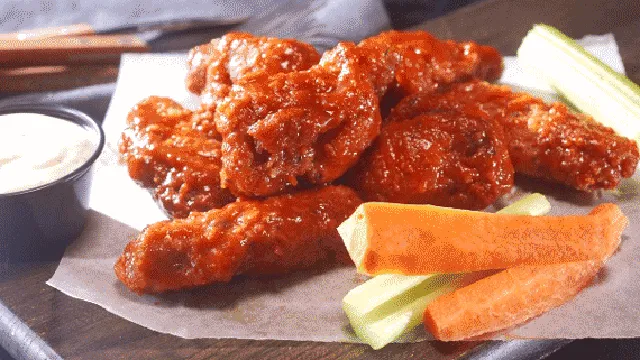
Judge rules boneless wings are still wings amid ongoing debate
Judge rules boneless wings are still wings amid ongoing debate
- A U.S. District Judge dismissed a lawsuit against Buffalo Wild Wings regarding the term 'boneless wings.'
- The judge's ruling was based on the idea that consumers do not expect literal interpretations of food item names.
- The ongoing debate highlights how definitions of food items evolve within contemporary culinary culture.
Story
In February 2023, U.S. District Judge John Tharp Jr. dismissed a lawsuit brought by customer Aimen Halim against Buffalo Wild Wings, challenging the chain's label of 'boneless wings.' Halim claimed that the term is misleading as he expected actual chicken wings without bones. The judge referenced a prior Ohio Supreme Court decision indicating that no reasonable diner assumes that certain menu items like 'chicken fingers' contain actual fingers, reinforcing that the use of misleading names in food items is subjective and often acceptable. Various chefs weighed in on the debate surrounding boneless wings. Carlo Filippone, founder of The Chicken Pound in New Jersey, acknowledged the complexity of consumer expectations regarding menu terminology. He noted that while consumers unfamiliar with the brand might find the name confusing, Buffalo Wild Wings is serving a variation of chicken wings, not misleading their customers about the product being actual chicken parts. He personally views boneless wings as closer to chicken nuggets based on his food production experience. Darin Leonardson, CEO of Transformed Culinary Solutions in Texas, argued that boneless wings do qualify as wings within contemporary food culture. He explained that the differentiation allows for a broader audience to enjoy chicken flavors without the challenges that bones might pose, particularly for seniors or those with difficulty eating traditional wings. Leonardson emphasized that the evolution of food culture embraces variety while maintaining flavor and accessibility, providing inclusion for different consumer preferences. Despite the dismissal of the lawsuit, the discussion on the definition of food terms continues to spark debate. The ruling reflects a broader societal acceptance of culinary adaptations, which include re-defining traditional food items to cater to changing consumer preferences. Debates will likely persist as chefs and consumers negotiate terminology and perceptions in the ever-evolving culinary landscape.


