

Brown University police chief placed on leave after deadly shooting fallout
Brown University police chief placed on leave after deadly shooting fallout
- Rodney Chatman, the police chief at Brown University, was placed on leave following a mass shooting that occurred on campus.
- The university is undergoing a comprehensive review of its safety policies and emergency response procedures in light of the recent shooting.
- This tragedy has sparked a conversation about campus safety and accountability at Brown University and beyond.
Story
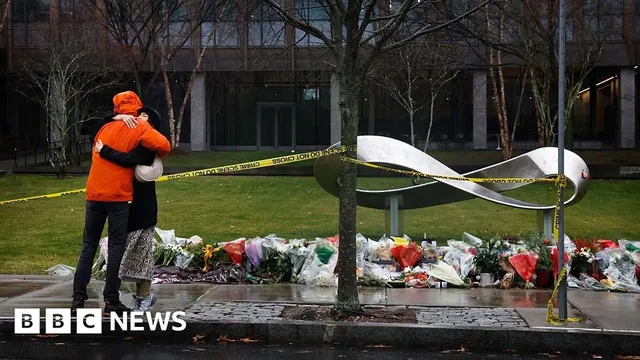
In December 2025, Brown University in the United States was shaken by a tragic mass shooting that resulted in the deaths of two students, Ella Cook and Mukhammad Aziz Umurzokov, with nine others injured. The shooting occurred when a suspect, identified as Claudio Neves-Valente, opened fire within a campus building known for its engineering and physics programs. Following this incident, which drew significant attention, university President Christina Paxson announced that Rodney Chatman, the vice president for public safety, would be placed on administrative leave as part of a broader review of campus safety protocols. The university's police response faced heavy criticism due to their failure to quickly apprehend the suspect and the lack of sufficient surveillance in the area where the shooting took place. As the aftermath unfolded, it was revealed that Neves-Valente had connections to Brown, having been a former graduate student, and he was later discovered deceased in a storage unit, prompting further discussions about campus security measures. In response to the shooting, the Department of Education began reviewing the university for potential violations of the Clery Act, which mandates that colleges maintain certain safety standards as a condition for federal funding. Despite Brown University's claim of having 1,200 security cameras on campus, gaps in surveillance were highlighted, particularly in the older building where the shooting occurred. President Paxson emphasized the importance of reviewing and enhancing campus security, while also noting the anxiety experienced by students after the attack. Alongside the internal safety review, an external assessment would be conducted to evaluate existing security policies and practices to prevent future incidents. The unaddressed grievances relating to campus safety raised questions about the university's governance and accountability, particularly from its board of trustees, who remained silent in the wake of the tragedy. President Paxson announced that Brown would form a rapid response team dedicated to addressing immediate safety concerns and overseeing the evaluation process. The hesitation from the university's leadership and the lack of communication from the board were viewed as failures to adequately support the campus community in a time of great distress. It was noted that the city of Providence and wider community had also felt the shock of the events, leading to a broader discourse on gun violence and campus safety across the nation. In light of the tragedy, various stakeholders must contribute to a comprehensive and actionable plan to ensure students' feelings of safety and security are restored on campus. Many individuals have begun to question how administrative decisions impacted the incident and called for swift reforms to campus safety measures to prevent tragedies such as this from occurring again. As further investigations unfold, it is likely that Brown University will face scrutiny not only for its response to the shooting but also for pre-existing concerns about its safety measures and resources. The university has begun preparations for potential lawsuits resulting from the incident and has sought legal counsel to navigate the complexities of liability and compliance with safety regulations.
Context
policy insight trends strategic analysis shift insight insight economic geopolitical trends geopolitical market data data market impact strategic economic market economic policy impact strategic global shift analysis geopolitical analysis geopolitical analysis strategic data insight trends market insight insight analysis shift policy analysis global global market insight insight global strategic analysis data market shift analysis policy global geopolitical trends data global shift trends policy global global policy strategic analysis policy policy global geopolitical shift global global market trends shift data shift...


