
politics
controversial
impactful

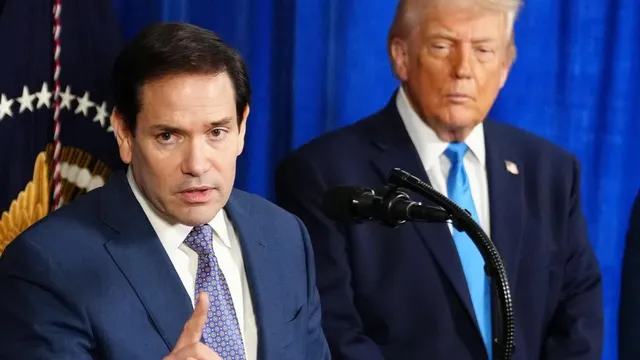
Marco Rubio outlines U.S. strategy for Venezuela during critical interview

Jan 2, 2026, 10:44 PM30
(Update: Jan 5, 2026, 3:29 PM)
American politician (born 1950)

Marco Rubio outlines U.S. strategy for Venezuela during critical interview

  • The 'This Week' program featured Secretary of State Marco Rubio discussing U.S. policy towards Venezuela.
  • The context included examination of domestic political challenges in San Francisco.
  • The dialogue highlighted the complexities and responsibilities the U.S. government has regarding foreign intervention.
Share your opinion
3

Story

On January 4, 2026, a significant discussion occurred during the 'This Week' program featuring prominent political figures in the United States. Secretary of State Marco Rubio addressed U.S. foreign policy directed at Venezuela, underscoring ongoing issues surrounding the country’s oil industry and economic situation. The interview highlighted the complexities involved in U.S. intervention and the legal limitations imposed on direct involvement in Venezuela's internal governance. In addition to Secretary Rubio, Senate Minority Leader Chuck Schumer and San Francisco Mayor Daniel Lurie participated, focusing on various challenges and political dynamics facing both the nation and the city of San Francisco. Marco Rubio pointed out the current quarantine on Venezuela's oil which aims to incentivize changes from the governing bodies that would benefit both the Venezuelan populace and U.S. interests. He emphasized that the U.S. position hinges upon the actions taken by those in power in Venezuela and stressed that any American involvement is conditional upon observable, tangible changes in the governance of the oil sector. The Secretary's remarks reflect a wider concern among U.S. lawmakers and citizens regarding the humanitarian and political crises escalating in Venezuela. During this overview, Lurie offered insights into the local governance issues he has faced as Mayor of San Francisco, consequently revealing the intersections between local and national political narratives. The discussion outlined not only foreign policy challenges but also domestic political landscapes, offering a multifaceted view of leadership in times of turbulent governance at various levels. The interview served as an important platform for politicians to convey their positions on pressing issues in the context of a politically charged atmosphere, showcasing the divide and debate surrounding U.S. foreign policies, particularly the complexities related to the Venezuelan oil dilemma. It painted a picture of ongoing political dialogues with implications affecting both domestic and international arenas. The program's diverse panel facilitated a broad discourse, balancing foreign and local concerns, showcasing how each sphere informs the other, especially in an interconnected world.

Context

The current status of U.S. relations with Venezuela is characterized by complexity and tension, shaped by a long history of political disagreements and economic sanctions. The deterioration began in the late 1990s and early 2000s as Hugo Chavez rose to power and pursued socialist policies, which were met with growing discontent from the U.S. government. Over the years, the U.S. has imposed various sanctions on Venezuela, citing human rights abuses, anti-democratic actions, and concerns over regional stability. The recent political landscape has further strained relations, especially after the 2018 elections, which the U.S. and many other nations viewed as fraudulent, leading to the recognition of opposition leader Juan Guaido as interim president in 2019. This marked a significant shift in U.S. policy, with increased support for those opposing the Maduro regime. In response to the U.S. actions, the Venezuelan government has accused the U.S. of imperialist aggression, leading to a series of retaliatory measures including the expulsion of U.S. diplomats and tightening of their national sovereignty claims. The political climate has also been fueled by economic challenges within Venezuela, which has seen severe hyperinflation, scarcity of essential goods, and a humanitarian crisis. The U.S. embargoes have compounded these issues, often making day-to-day life increasingly difficult for Venezuelans. Despite these challenges, communication channels have remained, albeit strained, particularly during negotiations for humanitarian aid and discussions around oil exports. In recent months, there have been movements toward potential dialogue, following the Biden administration's acknowledgment of the need for more inclusive discussions to address the humanitarian crises and exploring avenues to stabilize the situation in both nations. There is some hope that these discussions could open pathways for more constructive engagement regarding Venezuela's economic recovery and governance issues. However, the situation remains precarious, with ongoing concerns about human rights violations and political repression under the Maduro regime, which hinder any forthcoming resolution to the tensions. Furthermore, the geopolitical dynamics are shifting with the engagement of other international players such as Russia and China, who have provided support to the Maduro regime, complicating U.S. efforts to influence Venezuela's political trajectory. The relationship is thus caught in a complex web of domestic and international politics, where any changes depend not just on U.S. policy shifts but also on the internal dynamics within Venezuela and the response of global powers involved in the region. As of January 2026, the outlook on U.S.-Venezuela relations remains uncertain, with the potential for change hinging on various factors including leadership decisions, regional stability, and international diplomatic efforts.

2026 All rights reserved
