

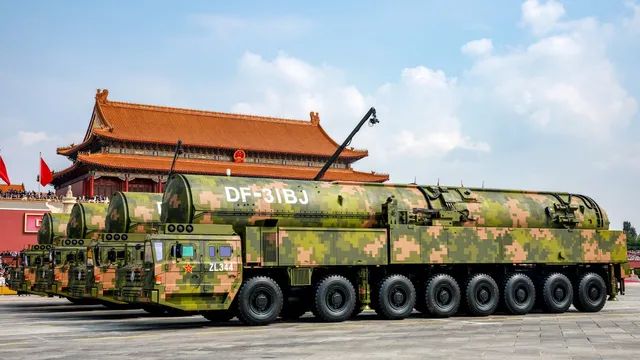
Civilians find DF-31 missile part in China's Inner Mongolia desert
Civilians find DF-31 missile part in China's Inner Mongolia desert
- Civilians discovered a section of the DF-31 ICBM in December 2024 in Inner Mongolia.
- The Pentagon reports China has over 100 DF-31-series missiles in three major silos.
- The video may raise concerns over military transparency and national security in China.
Story
In December 2024, a group of civilians discovered a nose section of a nuclear-capable Dong Feng-31 (DF-31) intercontinental ballistic missile in the Badain Jaran Desert, located in China's Inner Mongolia Autonomous Region. This event was captured and shared in a video on Douyin, the Chinese version of TikTok, where individuals were seen approaching the missile part and even climbing inside. The discovery comes at a time when the People's Liberation Army Rocket Force is reportedly enhancing its nuclear capabilities, with the Pentagon estimating over 100 DF-31 ICBMs being operational in various silos across northern and northwestern China. The DF-31 missile system is notable for its long range, with advanced variants capable of striking targets over 8,200 miles away, threatening much of the continental United States. Analysts perceive this development as part of China's military modernization, which includes a sizable increase in its nuclear stockpile—over 600 warheads according to U.S. estimates. The video highlights a significant moment in the ongoing arms race, as China expands its nuclear delivery capabilities while officially maintaining a no-first-use policy. In the aftermath of the video’s release, there is concern about how Chinese authorities will respond, given the strict military-related content regulations in China. As of early February 2026, the video remains available on Douyin, reflecting the ongoing public interest and possible implications of this discovery on national security and international relations. Information surrounding military operations, particularly those involving nuclear weapons, is typically highly controlled in China, leaving the future of this video and related discussions uncertain. The Pentagon’s annual assessment suggests that China is actively working on improving its military technologies and responses, as evidenced by this missile's discovery in the field. The emerging narrative around China's missile capabilities raises questions regarding regional stability and the potential escalation of military tensions in the Asia-Pacific region, forcing neighboring countries and global superpowers to reevaluate their defense strategies in response to China's growing military prowess.


