

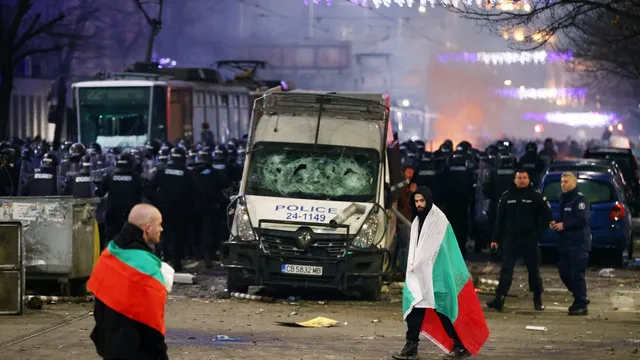
Bulgarian PM Rosen Zhelyazkov resigns amid mass protests over corruption
Bulgarian PM Rosen Zhelyazkov resigns amid mass protests over corruption
- Mass protests in Bulgaria led to the resignation of Prime Minister Rosen Zhelyazkov.
- Protesters expressed widespread anger over government corruption and a controversial budget proposal.
- Zhelyazkov's resignation indicates deeper political instability in Bulgaria as the country approaches Eurozone membership.
Story
In Bulgaria, mass protests erupted as citizens expressed discontent against the government, driven primarily by widespread allegations of corruption and dissatisfaction with proposed tax hikes outlined in a contentious 2026 budget. Tens of thousands participated in these demonstrations, particularly on December 10, 2025, in Sofia and other cities across the nation, demanding the resignation of Prime Minister Rosen Zhelyazkov and other political figures perceived to be part of the corruption problem. The protests were notable for their size and scale, with reports detailing more than 100,000 participants. This movement not only targeted the specific budget proposal but further called attention to larger issues of corruption within the government and the influence of oligarchs on Bulgarian politics. As a result of the growing unrest and pressures from opposition parties, Zhelyazkov's government announced its resignation on December 11, just ahead of a scheduled no-confidence vote. The prime minister acknowledged the people's discontent, stating that decisions made by the government should mirror the will of the public. This government upheaval comes at a critical time as Bulgaria is set to adopt the euro as its currency on January 1, 2026, which adds pressure to political stability in the run-up to this change. The protests have highlighted the fragile political status in Bulgaria, which has faced repeated elections and unstable coalitions in recent years. Citizens, particularly from younger demographics, expressed a desire for genuine political reform and a future free from systemic corruption. The situation marks a significant moment in Bulgaria's political history, especially considering the country holds the title of the poorest nation within the EU, compounded by ongoing concerns over corruption and mismanagement of public resources. Zhelyazkov's resignation signals potential shifts in the political landscape, as discussions of new elections loom on the horizon. The situation remains fluid as Bulgaria navigates its immediate future within the EU framework as a Eurozone member nation.
Context
Bulgarian political history is marked by a tumultuous journey characterized by periods of significant reform, foreign influence, and persistent challenges with corruption. The late 19th and early 20th centuries saw Bulgaria emerge as a modern state after centuries of Ottoman rule. Following its liberation in 1878, Bulgaria navigated through monarchy and early democratic reforms, which culminated in the establishment of a constitutional monarchy. However, this era also faced external pressures, particularly from the surrounding Balkan nations and the great powers of Europe, eventually leading to the Balkan Wars and World War I. The post-war period was marred by economic struggles and social unrest, facilitating the rise of authoritarian regimes and political instability that continued until the mid-20th century. The end of World War II marked a critical turning point as Bulgaria fell under the influence of the Soviet Union, resulting in the establishment of a socialist state. This period, lasting until the fall of communism in 1989, was characterized by state control of the economy and suppression of political dissent, although it also saw advancements in education and social services. The transition to a democratic government post-1989 was fraught with difficulties, as the newly formed political landscape struggled with the legacies of the past. Economic reforms were slow, and political parties faced challenges in gaining public trust amid widespread corruption and the influence of former communist leaders in new roles. Corruption has been a persistent issue in Bulgarian politics, impacting governance, public trust, and economic development. Various surveys, including those conducted by Transparency International, have highlighted the extent of perceived corruption in public institutions, law enforcement, and the judiciary. Despite Bulgaria’s accession to the European Union in 2007, the struggle against corruption has remained a central issue, prompting the EU to impose a monitoring mechanism to assess Bulgaria's judicial reforms and anti-corruption efforts. Numerous high-profile corruption cases have been reported, which have led to public protests and calls for accountability and transparency in governance. As of late 2025, the Bulgarian political landscape continues to evolve, with ongoing debates surrounding judicial independence, media freedom, and civil rights. The dynamics of parliamentary politics reflect deep divisions among parties and a fragmented electorate, which complicates efforts to achieve consistent policy implementation. Addressing the entrenched issues of corruption demands a concerted effort from all levels of government, civil society, and active participation from citizens. The path towards a more transparent and accountable political system is fraught with obstacles, but remains essential for Bulgaria’s democratic consolidation and development.


