

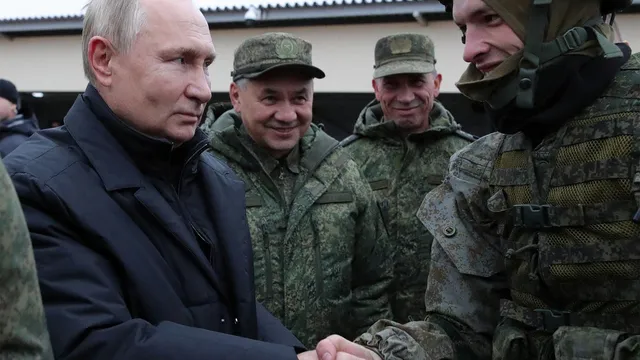
Russia suffers catastrophic losses with over 1,700 troops killed in one day
Russia suffers catastrophic losses with over 1,700 troops killed in one day
- Ukraine reported killing or wounding 1,710 Russian troops on March 17, constituting a severe loss for Russia.
- The Ukrainian military successfully destroyed significant amounts of Russian military resources, including artillery and vehicles.
- The rising casualties raise questions about Russia's capability to sustain its military offensive amidst stalled peace talks and ongoing challenges.
Story
In the ongoing conflict between Ukraine and Russia, a significant escalation took place on March 17, 2026, when Ukrainian military officials reported that they killed or wounded approximately 1,710 Russian soldiers. This event marked Russia's deadliest day of the war to date, as it struggled to maintain momentum in a planned offensive against Ukraine. The offensive focused on the Zaporizhzhia front, where Russian forces employed infantry and various vehicles under challenging conditions, including fog. Ukrainian forces countered these efforts with effective drone strikes and strategic military operations that severely hampered the Russian advance. Over recent months, Russian military casualties had averaged between 700 to 900 troops daily, but the dramatic increase in losses indicates a significant shift in the battlefield dynamics. According to information from the Ukrainian military, the unmanned systems force, primarily responsible for drone strikes, inflected severe damage on Russian troops during a critical phase of combat. The Ukrainian military's efficiency in executing these strikes was particularly dangerous for Russian forces as they attempted to coordinate their assaults. Furthermore, the Ukrainian military had also reportedly destroyed considerable military resources, including 29 artillery systems and around 230 vehicles and fuel tankers during this period. The backdrop of this escalation in hostilities included stalled peace talks between representatives of the United States, Russia, and Ukraine. The Kremlin remarked that these discussions were on a
Context
The current situation in the Ukraine-Russia conflict remains highly complex and dynamic as of March 2026. Since the conflict escalated in February 2022, it has had profound implications not only for Ukraine and Russia but also for global geopolitics. As the war progressed, it has transformed into a protracted battle, characterized by shifting frontlines and significant human, economic, and environmental costs. The Ukrainian military, supported by Western allies, has made notable gains in counteroffensives, reclaiming territory previously controlled by Russian forces. In response, Russia has intensified its military operations, utilizing both conventional tactics and hybrid warfare strategies, which have included cyber-attacks and disinformation campaigns that aim to destabilize Ukraine and undermine Western support for it. The humanitarian impact of the conflict has been devastating, with millions of Ukrainians displaced, both internally and as refugees in other countries. Civilian areas have been heavily targeted, exacerbating the crisis and drawing international condemnation. The conflict has also strained the global economy, particularly affecting energy and food supplies, as Ukraine is a major exporter of grains and Russia is a key player in the energy market. The economic sanctions imposed on Russia by Western nations have led to significant repercussions for its economy, but the long-term effectiveness of these measures remains a topic of debate among experts. Economies around the world are grappling with the fallout, and discussions surrounding energy independence and the security of supply chains have gained prominence since the conflict began. Diplomatic efforts to resolve the conflict have proven largely ineffective thus far. While various international bodies have attempted to mediate and propose frameworks for peace negotiations, entrenched positions on both sides complicate progress. Ukraine insists on the complete withdrawal of Russian troops as a prerequisite for negotiations, whereas Russia seeks recognition of its territorial gains and security guarantees. The playing field for diplomacy is further complicated by the involvement of NATO and other international alliances, which have provided military assistance to Ukraine, thus reinforcing its defensive capabilities. Recent statements from leaders on both sides suggest a mutual unwillingness to make concessions, indicating that the prospect for an immediate resolution remains bleak. As the situation continues to evolve, the international community remains vigilant, monitoring developments closely and adjusting strategies accordingly. The potential for escalation poses significant risks not only for regional stability but also for international security. Future actions by Russia, especially in the face of increasing international isolation, will be crucial in determining the next phases of this conflict. While the immediate military engagement shows no signs of abating, the intersection of military, humanitarian, and geopolitical dimensions necessitates sustained attention to promote a resolution that ensures lasting peace in the region.


