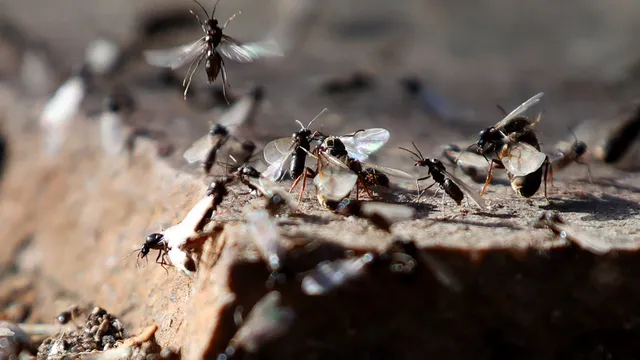
In the UK, an unusual weather phenomenon has been observed as swarms of giant, flying ants, known as alates, have been impacting various regions. This occurrence typically happens during the summer months of July and August, coinciding with hot and humid weather conditions that are ideal for these insects. The Met Office has reported that their radar has been detecting not only rain but also these insects, which are similar in size to raindrops, leading to false weather readings. This year, the swarms have arrived earlier than usual due to record-breaking heatwaves experienced across the country.
The Natural History Museum in London explains that these flying ants are sexually mature queens and males of the black garden ant species. They participate in a nuptial flight, during which they mate to establish new colonies. After mating, the queens search for suitable nesting sites, while the males die shortly thereafter. The phenomenon is common in urban areas, where the urban heat island effect allows the insects to appear earlier than in rural regions. This year, the swarms have been particularly noticeable, causing disruptions in various activities, including tennis matches at Wimbledon.
In previous years, players have reported being disturbed by flying ants during matches, with notable complaints from Danish tennis player Caroline Wozniacki in 2018. The swarming of these ants is harmless to humans, as they are primarily focused on mating and establishing new colonies. However, the timing of their appearance can be unfortunate, especially for outdoor events and activities. The Royal Society of Biology has conducted studies indicating that these ants only fly on warm days, avoiding cold or windy conditions, which further explains their presence during the current heatwave.
As the UK continues to experience extreme weather conditions, the impact of these swarms serves as a reminder of the interconnectedness of climate and natural phenomena. The unusual timing and scale of the swarms this year highlight the potential effects of climate change on insect behavior and population dynamics. Residents are advised to remain aware of this phenomenon, as it is expected to continue throughout the summer months, particularly in urban areas where heat retention is more pronounced.