

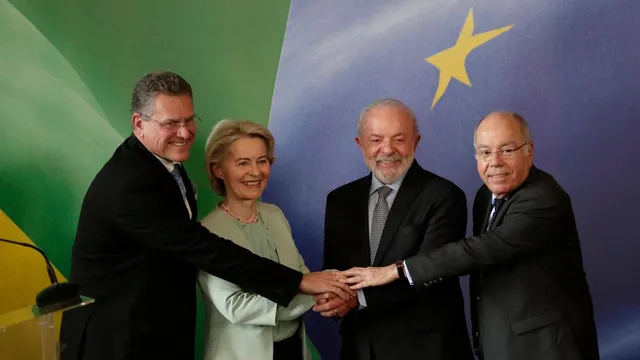
EU and Mercosur near agreement on landmark free trade deal
EU and Mercosur near agreement on landmark free trade deal
- The EU and Mercosur are expected to sign a long-delayed trade deal after 25 years of negotiations.
- This agreement will eliminate tariffs on key products, benefiting agricultural exports from South America and European industries.
- The pact represents a significant step towards diversifying trade relationships and enhancing economic autonomy for South American nations.
Story
Argentina, Brazil, Paraguay, and Uruguay are on the verge of signing a long-awaited free trade agreement with the European Union. This historic accord, years in negotiation, is set to be finalized at a ceremony in Paraguay. It aims to eliminate tariffs on a range of products, including agricultural goods and vehicles, while enhancing trade relations between these blocks. As part of this agreement, South American countries, particularly Argentina and Brazil, will receive preferential access to the EU market, potentially accruing significant economic benefits. The background to this agreement reflects changing geopolitical dynamics. The trade pact symbolically challenges the increasing influence of China in the region, amid tensions with the United States. Countries in South America are keen to diversify their trade partnerships away from traditional allies while situating themselves strategically in the global trade landscape. Additionally, the deal poses significant implications for various sectors, particularly agriculture and automotive manufacturing. The elimination of tariffs will greatly benefit South American agricultural exporters, allowing them to significantly reduce costs and increase competitiveness in the vast European market. For European industries, including automotive and machinery sectors, this pact opens new avenues for securing market shares that had previously been affected by competition with Chinese imports. While the deal is positioned as a landmark achievement for both sides, challenges remain. Protectionist lobbies within the EU have voiced strong concerns over the potential ramifications for local industries, which could complicate the ratification process in the European Parliament. As participants gather for the signing ceremony, the possibilities and uncertainties of this trade deal reflect broader shifts in the global economy and trade relations.


