

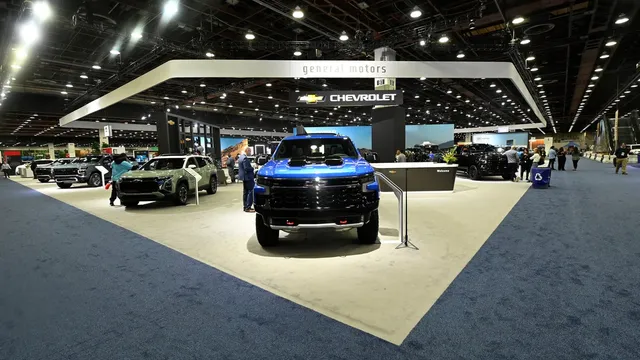
Trump promotes pro-fossil fuel policies at Detroit Auto Show
Trump promotes pro-fossil fuel policies at Detroit Auto Show
- President Donald Trump visited Detroit to meet the Economic Club and tour an F-150 truck plant.
- The auto show took place from January 14 to January 25, featuring over 40 vehicle brands.
- The shift from electric vehicles to hybrids and gas-powered cars reflects current market challenges.
Story
The North American International Auto Show occurred in Detroit from January 14 through January 25, 2026, bringing car enthusiasts together to experience both new and old vehicle models. A significant event prior to the opening was a visit from President Donald Trump, who addressed the Detroit Economic Club and toured a manufacturing plant producing F-150 trucks. Trump's visit reaffirmed his administration's pro-fossil fuel stance, which has reportedly influenced the automotive industry’s recent pivot away from electric vehicle (EV) development. While the show continues to feature various car brands, the previous focus on EVs has shifted to include hybrids and gas-powered vehicles, reflecting broader market trends. Todd Szott, chairman of this year's event, acknowledged that consumer preferences have evolved and impacted how manufacturers present their vehicles at auto shows. Last year, the Detroit Auto Show attracted 275,000 attendees, who participated in interactive experiences and ride-along demonstrations, highlighting the shift toward consumer engagement at such events. The 2026 show featured more than 40 vehicle brands and included discussions around the future of the automotive industry in light of recent policy changes and global competition, particularly from China.
Context
The automotive industry is undergoing a significant transformation, primarily driven by the push for sustainable energy solutions and the technological advancements in electric vehicle (EV) technology. As of January 2026, the market is witnessing a robust competition between electric and gasoline vehicles. This ongoing rivalry is fundamentally fueled by changing consumer preferences, regulatory pressures aimed at reducing carbon emissions, and the shifting landscape of energy production toward renewable sources. Electric vehicles, which were once viewed as a niche market, have emerged as mainstream choices due to their environmental benefits and advancements in battery technology that enhance their performance and range. In countries such as Norway and China, electric vehicle sales have outpaced gasoline vehicles, illustrating a shift in consumer attitudes and adoption trends around the globe. The rise of electric vehicles is accompanied by significant investments in charging infrastructure, which are essential to alleviate range anxiety among potential EV buyers. Governments are actively collaborating with private sectors to enhance charging networks, making EV ownership more attractive and practical. Moreover, several governments are implementing regulations that phase out the sale of new gasoline vehicles within the next decade. These measures significantly impact the feasibility of gasoline vehicles, thus nudging consumers toward adopting electric solutions. In parallel, advances in technology are compelling traditional automotive manufacturers to pivot their strategies towards emphasizing EV production, with many announcing ambitious goals to transition fully to electric lineups by 2030. Despite the momentum behind electric vehicles, challenges persist. The initial purchase price of EVs, although decreasing due to economies of scale and subsidies, is still higher than their gasoline counterparts for many consumers. Additionally, the recycling and environmental impact of battery production and disposal remains a critical concern that needs addressing for the long-term sustainability of the electric vehicle market. Concerns about the grid's capacity to handle the increased demand for electricity due to a surge in electric vehicles also require thoughtful consideration. The industry must find equitable solutions to ensure that the electrical infrastructure is prepared to sustain this impending shift. In conclusion, the battle between electric and gasoline vehicles is a microcosm of broader societal shifts towards sustainability and innovation. As consumers continue to prioritize environmental considerations, manufacturers are compelled to adapt to these new demands. The shift towards electric vehicles will likely accelerate due to both consumer preferences and legislative actions. However, to maintain a balanced transition, close monitoring of infrastructure development, regulatory support, and technological advancements will be vital. The next few years will be critical in determining whether electric vehicles can fully realize their potential as the standard in the automotive industry or if gasoline vehicles will still retain a significant market share due to operational and economic factors.


