

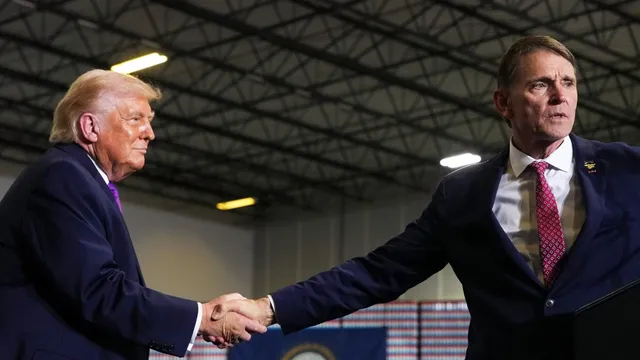
Trump tightens grip on GOP with 10 endorsements in May primaries
Trump tightens grip on GOP with 10 endorsements in May primaries
- In May 2026, Donald Trump endorsed 10 challengers to incumbent Republicans in several primaries, leading to a series of electoral victories for his candidates.
- High-profile incumbents like Rep. Thomas Massie and Sen. Bill Cassidy were unseated, showing the weight of Trump's political influence.
- This trend signals a shift within the GOP, emphasizing a demand for tangible results over traditional party loyalty.
Story
In May 2026, President Donald Trump intensified his influence over the Republican Party by endorsing 10 candidates in GOP primaries, directly challenging several sitting Republicans. This campaign resulted in a significant number of victories for Trump-backed candidates, with most of his endorsed challengers defeating incumbents in their respective races. High-profile targets such as Rep. Thomas Massie and Sen. Bill Cassidy were among those unseated, illustrating Trump's retribution strategy against Republicans who previously opposed him, particularly on issues like impeachment and spending. Notably, Trump's endorsement of state Attorney General Ken Paxton in the Texas Senate primary runoff showcased his willingness to back candidates embroiled in controversy. While some factions within the Republican Party expressed concern about the potential risks posed by Paxton's past legal troubles, Trump's strategy seemed to resonate with his base, as seen in Paxton's decisive victory over long-serving Sen. John Cornyn. Local GOP members perceived Trump's backing as a message that political loyalty should yield tangible results rather than mere party alignment. In several instances, Trump’s preferred candidates experienced substantial financial backing from outside groups, which aided their campaigns dramatically. The competitive environment of these primaries, marked by an unprecedented surge in ad spending, particularly highlighted the financial stakes involved in races against incumbents. For example, Rep. Thomas Massie’s primary became the most expensive House primary in history, costing over $33 million in advertisements, reflecting both the significance of Trump's endorsements and the lengths to which party loyalists are going to secure electoral victories. As electors gear up for the general elections, the impact of Trump's endorsements is poised to shape not only the Democratic opposition but also the overall narrative within the GOP. With Ken Paxton now facing Democratic challenger James Talarico, the fallout from these primaries may influence Republican strategies going into future elections. The recent primary results underscore the commanding role that Trump continues to play within the Republican Party, affirming the belief that his endorsements can profoundly alter candidate success rates and fundamentally reshape party dynamics as midterm elections approach.
Context
The influence of former President Donald Trump on the Republican Party's primary elections has been a subject of extensive analysis, especially in light of his significant endorsement power. Trump has developed a notable ability to sway GOP voters towards candidates who align with his political style and beliefs. This endorsement impact manifests in both the electoral strategies of candidates across the party and the broader ideological direction of the Republican Party. In the wake of his presidency, Trump's endorsement has become a coveted asset; candidates who receive his backing often experience a marked surge in their poll numbers and donor support. This dynamic illustrates the extent to which Trump's brand continues to dominate the Republican landscape, shaping the narrative of primary races significantly. The implications of Trump's endorsements extend beyond electoral outcomes; they reshape the GOP's ideological contours. Candidates who embrace Trump's populist rhetoric and positions typically enter the race with a built-in advantage in terms of name recognition and base enthusiasm. The alignment with Trump’s ideologies has been increasingly seen as a prerequisite for gaining traction within Republican primaries. This trend has led to a bifurcation within the party, where traditional establishment figures are challenged by candidates who more closely mirror Trump's frequently confrontational and unorthodox approach to politics. As a result, Republican primary elections have become battlegrounds not just for policy debates but also for control over the party's future identity. Recent primary elections illustrate these trends vividly, with candidates who received Trump’s nod often clinching their party’s nomination in tight races. This can be seen in the 2022 midterms, where Trump's endorsements were decisive for many candidates, shaping electoral outcomes across various states. The phenomenon indicates a shift from traditional candidate profiles, where establishment endorsements were once critical. Instead, the endorsement from Trump has emerged as a new litmus test for candidate viability, effectively creating a scenario where adherence to Trump's narrative, rhetoric, and political persona supersedes other metrics of candidate appeal, such as experience or prior legislative accomplishments. As the Republican party approaches future elections, particularly the presidential race in 2024, the ramifications of Trump's endorsement strategy will likely play a pivotal role in shaping candidate selection and voter turnout. The evolving landscape suggests that candidates must navigate an intricate balance between appealing to Trump’s political base and addressing the broader electorate's concerns. The analysis of Trump’s endorsement impact thus reveals not only the current dynamics within GOP primaries but also hints at the possible future path of the party as it endeavors to consolidate power while maintaining a cohesive identity. As the situation develops, monitoring trends in endorsements, voter reactions, and the broader political context will be essential for understanding the trajectory of the Republican Party.


