

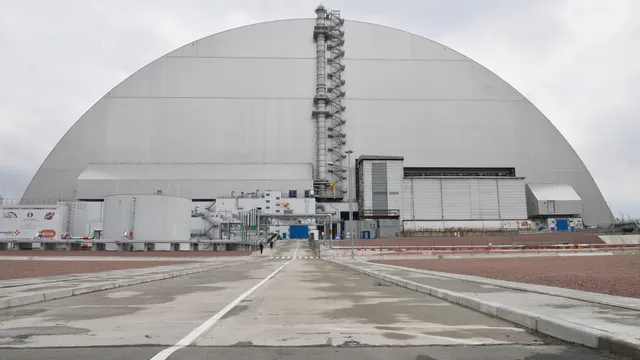
Russian drone strike damages Chernobyl's radiation shield
Russian drone strike damages Chernobyl's radiation shield
- A drone strike reportedly hit the protective shelter at Chernobyl, raising concerns about radiation containment.
- Ukrainian authorities confirmed that a fire caused by the strike was extinguished quickly, but the damage was significant.
- This incident highlights the ongoing threat to nuclear safety amid the ongoing conflict in Ukraine.
Story
In Ukraine, a Russian drone strike has severely compromised the protective shield at the Chernobyl nuclear disaster site, which was originally established following the catastrophic reactor explosion in April 1986. The International Atomic Energy Agency (IAEA) confirmed that the shielding which has enveloped the reactor for decades is no longer effectively blocking radiation. This incident reportedly occurred in February 2025, amidst ongoing military hostility between Ukraine and Russia. Ukrainian authorities initially indicated that a fire resulting from the drone attack was swiftly contained, although the integrity of the site became a cause for concern. The conflict between Ukraine and Russia has intensified, with the latter continuously targeting vital infrastructure, including energy sites critical to the functioning of nuclear power plants. Ukrainian President Volodymyr Zelensky has reported that since the beginning of winter, these attacks have escalated, compromising energy security across the nation. This pattern of attack has not only affected energy generation capacities but has also raised alarms regarding the safety of nuclear power operations in Ukraine. The IAEA has remained actively involved, with its experts traveling throughout Ukraine to monitor nuclear safety and assess the implications of military strikes on nuclear sites. They are particularly focused on ensuring that various electrical substations that play a crucial role in the safe operation of nuclear facilities are still functional. The agency has a team on-site at Chernobyl, committed to supporting efforts to restore complete nuclear safety and security. As tensions remain high, the global community is watching closely to determine how situation developments will impact nuclear safety standards, especially considering the historical significance of Chernobyl as the site of the worst nuclear disaster. Analysts suggest that the current situation could have lasting implications for regional stability and international responses to nuclear safety concerns in conflict situations.
Context
The International Atomic Energy Agency (IAEA) plays a critical role in ensuring nuclear safety, particularly in conflict-affected regions. As the global focal point for nuclear safety, the IAEA is tasked with promoting safe, secure, and peaceful nuclear technologies. In times of armed conflict, the risks associated with nuclear facilities increase significantly due to potential physical damage, mismanagement, and human error. The IAEA's involvement is essential in mitigating these risks through various mechanisms, including monitoring, guidance, and emergency response coordination. They work diligently to assess the safety of nuclear facilities located in areas of hostilities and help establish protocols for ensuring their operation remains secure, even under threat. The agency provides member states with essential frameworks and guidelines aimed at enhancing nuclear safety standards, with a particular focus on protecting facilities during conflicts. This involves regular training, capacity building, and emergency preparedness activities, which empower local authorities to manage risks effectively. The IAEA also acts as a mediator between conflicting parties, offering expertise and facilitating dialogue to ensure nuclear safety measures are upheld. Through initiatives such as the development of response strategies for potential radiological incidents, the IAEA fortifies the global nuclear safety architecture against the backdrop of armed conflict. Furthermore, the IAEA engages in extensive collaboration with various international organizations, governments, and civil society to promote nuclear safety awareness in conflict zones. By fostering a comprehensive approach that combines technical assistance with policy advocacy, the IAEA works towards reducing the likelihood of nuclear accidents and incidents stemming from conflict. The agency prioritizes establishing a culture of safety and preparedness, ensuring that all stakeholders are aware of their roles in upholding nuclear safety, even in unstable environments. This collaborative spirit is crucial for maintaining the integrity of nuclear facilities, thereby mitigating the potential consequences of a nuclear disaster. In conclusion, the IAEA's role in nuclear safety amidst conflict is multifaceted and significant. The agency continually strives to enhance nuclear safety frameworks, provide essential support to its member states, and engage in international cooperation to create a safer world. By focusing on preparedness, response, and adherence to safety protocols, the IAEA aims to protect both human life and the environment in the face of challenges posed by conflict, thereby reaffirming its commitment to safe and peaceful uses of nuclear energy.


