

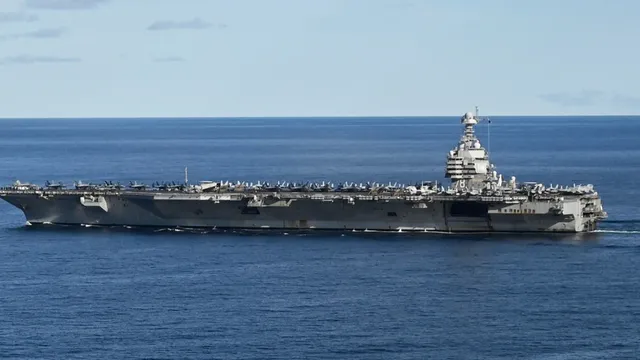
USS Ford Carrier Strike Group heads to Middle East amid Iran tensions
USS Ford Carrier Strike Group heads to Middle East amid Iran tensions
- The USS Ford Carrier Strike Group has been redirected from the Caribbean to the Middle East.
- Tensions between the U.S. and Iran have escalated, prompting military preparedness.
- This deployment reflects the U.S. strategy to pressure Iran amid ongoing negotiations.
Story
In the context of escalating tensions between the United States and Iran, the USS Ford Carrier Strike Group has been redirected from its original mission in the Caribbean to the Middle East. This deployment is a significant response to the ongoing strained relations, particularly following indirect negotiations between the two nations in Oman, which have not yielded fruitful results. These negotiations took place against a backdrop of heightened insecurity in the region, where Gulf Arab nations have expressed concerns about the potential for renewed conflict due to any military actions against Iran. The significance of this redirection is compounded by the internal turmoil within Iran, as the country faces widespread mourning and unrest following a severe governmental crackdown on protests that resulted in thousands of deaths, emphasizing the regime's vulnerabilities. The United States, under President Donald Trump’s administration, has indicated its readiness to act decisively if necessary, suggesting that the second carrier strike group is a precautionary measure. Trump aims to exert pressure on Iran to reach a deal regarding its nuclear program, having warned that failing to do so would result in dire consequences for the country. This move aligns less with Trump’s earlier focus on the Western Hemisphere and instead showcases a pivot back to the volatile Middle East, illustrating a shift in strategic priorities even as the administration grapples with its national security objectives. The USS Ford set out for deployment in late June 2025 and faces an extended duration of operation, thereby placing additional strain on the crew amid the evolving geopolitical landscape. There have been mixed responses from regional players; while some view the U.S. presence as stabilizing, others fear it could exacerbate tensions, especially with Iran engaged in internal struggles and widespread mourning ceremonies for the victims of recent protests. The situation remains fluid as diplomatic avenues are still being explored, but the military preparations signal an intention by the U.S. to maintain a strong stance in the face of potential Iranian provocations.


