

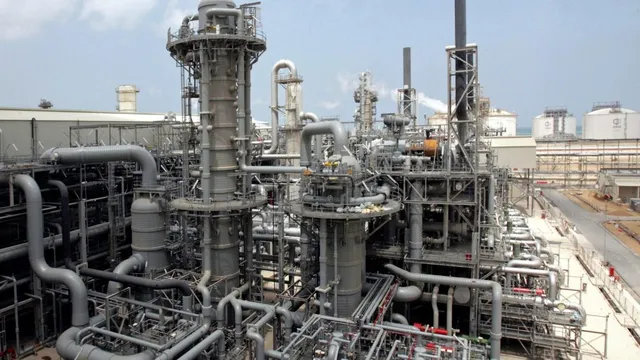
Qatar's helium production halts due to war, global shortages imminent
Qatar's helium production halts due to war, global shortages imminent
- The cessation of helium production in Qatar is due to the ongoing war that erupted three weeks ago.
- Helium plays a critical role in various industries, including semiconductor manufacturing and medical imaging.
- The move intensifies global supply concerns and could lead to significant price increases for helium.
Story
In response to recent conflict in the region, Qatar halted helium production shortly after the war broke out three weeks ago. This suspension is significant given Qatar's pivotal role in the global helium market, as the nation accounts for roughly 30% of the world's helium supply, according to the U.S. Geological Survey. The cessation of helium production at the Ras Laffan facility, the largest liquefied natural gas plant globally, has raised serious concerns over supply availability, particularly for industries relying heavily on this critical gas. Industries such as semiconductor manufacturing and medical imaging are particularly vulnerable to helium shortages. Chipmakers utilize helium for cooling wafers—essential components that house complex electronic circuits—which are essential in manufacturing processes. As helium is an excellent thermal conductor, chip fabs may face production delays without adequate supplies. The medical industry also depends on helium to cool superconducting magnets found in magnetic resonance imaging machines. Concerns have been amplified due to the ongoing geopolitical unrest, which threatens to prolong supply chain disruptions. Companies like Samsung Electronics and SK Hynix, which constitute significant players in the semiconductor market, import approximately 65% of their helium from Qatar. Despite holding several months of inventory currently, they are urged to expedite the sourcing of alternative helium supplies to mitigate potential shortages. The recent hostilities are expected to not only strain helium availability but also impact other materials critical to semiconductor manufacturing as the war continues. As businesses reorganize their supply chains in light of these events, the early stages of this shortage are likely to be the most challenging. Helium is predominantly traded through long-term contracts, making spot trading—a segment that represents only about 2% of the market—less impactful on immediate prices. However, price hikes for existing contracts are anticipated as companies adapt to the shrinking supply conditions. As this situation unfolds, the effects on the semiconductor industry and broader economy will be closely monitored.
Context
The geopolitical impact on global helium supply has become a pressing issue as nations grapple with the finite resources of this critical element, primarily used for various high-tech applications, including medical imaging, space exploration, and electronics manufacturing. As of March 2026, the demand for helium continues to rise, while its availability is largely governed by complex international relations and market dynamics. The two major sources of helium are the United States and Qatar, with the former historically being the largest supplier. However, shifting geopolitical landscapes pose risks that could exacerbate supply volatility and affect global prices. In recent years, the U.S. has seen a decline in helium production due to the depletion of its federal helium reserve, leading to a strategic reassessment of how helium is sourced and distributed. Concurrently, tensions in the Middle East, particularly related to Qatar's geopolitical position, have heightened concerns over the stability of helium exports. As countries seek to diversify their helium sources, the potential for conflicts over resource access becomes more pronounced. Nations that depend heavily on helium imports must navigate these international uncertainties, which can lead to supply disruptions and price escalations in global markets. The emergence of alternative helium sources, including helium extraction from natural gas fields in countries such as Canada, Australia, and Russia, aims to mitigate supply risks. However, the feasibility and economic viability of these alternatives remain in question given the significant initial investment required and the existing infrastructure challenges. Moreover, as countries compete for limited helium resources, collaborative international frameworks will be essential to ensure sustainable and equitable access. This necessitates a delicate balance between national interests and wider global cooperation to address the impending scarcity of helium. In conclusion, the geopolitical factors influencing global helium supply highlight the importance of resource management in an increasingly interconnected world. As demand continues to outpace production capabilities, it is crucial for policymakers and industry leaders to develop strategic partnerships and invest in new technologies for helium extraction and recycling. Only through coordinated efforts can nations hope to secure a stable helium supply amidst the complexities of global geopolitics.


