

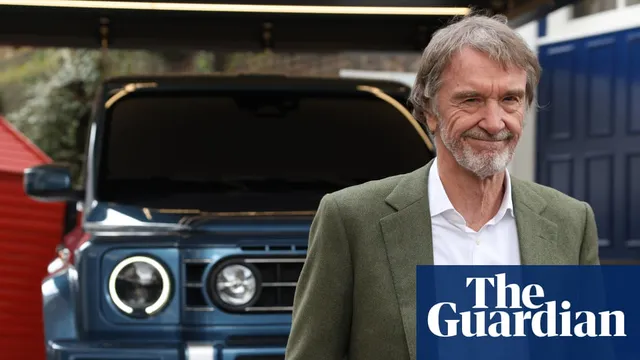
Ineos faces turmoil as it announces significant job cuts amid debt crisis
Ineos faces turmoil as it announces significant job cuts amid debt crisis
- Ineos Automotive plans to lay off several hundred employees to improve efficiency.
- The company has faced significant production issues, including a recall of 7,000 vehicles.
- Mounting debt and financial pressure have raised concerns about the future of Ineos.
Story
In the face of mounting debt and operational challenges, Ineos Automotive, a car manufacturer owned by billionaire Jim Ratcliffe, is initiating extensive job cuts. The company operates a global workforce of approximately 1,700 employees and is expected to lay off several hundred staff primarily from its head office, situated in multiple locations across the UK and parts of Europe. While the exact number of job losses has not been disclosed, the strategic restructuring aims to simplify operations and enhance overall efficiency. This move highlights the difficulties the company has encountered in achieving profitability amid various operational setbacks in recent months. Ineos, which is presently focused on the production of the Grenadier—an off-road vehicle modeled after the discontinued Land Rover Defender—has faced significant production challenges at its manufacturing plant in Hambach, France. A notable misstep occurred when the company recalled over 7,000 Grenadier units in the United States due to issues with faulty doors. The situation worsened when increased tariffs imposed by the former U.S. President Donald Trump on car imports further exacerbated Ineos Automotive's struggle, particularly since the U.S. market represents the largest consumer base for the Grenadier. As a result of these interconnected factors, Ineos is navigating through a precarious financial landscape fraught with uncertainties. Moreover, Ineos's parent company has seen a troubling escalation in debt levels, contributing to an overall lack of confidence from credit rating agencies. Fitch Ratings and Moody's have drawn attention to the company’s burgeoning debt—reported to be as much as eight times its annual earnings—adding significant pressure on the financial stability of the group. For Ratcliffe, who built Ineos largely through strategic acquisitions fueled by substantial borrowing, the situation demands immediate attention. In response, Ineos has implemented measures to cut costs not only in the automotive sector but also across its broader chemical manufacturing operations, which recently included a decision to close two chemical factories in Germany and a substantial reduction in jobs at its East Yorkshire facility. The company has criticized European green policies, asserting that these regulations elevate energy costs and hinder competitiveness in the global market. Addressing what it describes as “industrial suicide,” Ineos is seeking to file anti-dumping cases to limit the influx of inexpensive chemical products into the European Union. Despite these efforts, the overarching financial uncertainties facing Ineos pose critical questions regarding the sustainability of operations and Ratcliffe’s long-term vision for the company. If the current trajectory continues, there are fears over whether Ineos can ultimately secure its position in an increasingly competitive marketplace replete with economic pressures. The decision to proceed with job cuts, albeit regrettable, aligns with broader strategies aimed at stabilizing the corporation. With Ratcliffe's substantial net worth and involvement in high-profile ventures like Manchester United, industry observers are keenly watching how Ineos navigates these challenges and whether it can ultimately restore its reputation and operational viability in the months to come.


