

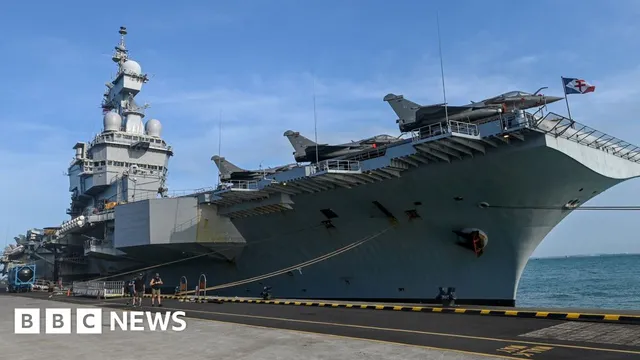
French sailor exposes aircraft carrier location through Strava
French sailor exposes aircraft carrier location through Strava
- A French naval officer logged a public run on Strava that disclosed the aircraft carrier's coordinates.
- The incident was verified by Le Monde and raised security concerns over military transparency.
- France is taking measures against the officer as part of ongoing efforts to enforce digital security protocols.
Story
In March 2026, tension in the Middle East prompted France to deploy its aircraft carrier Charles de Gaulle to the eastern Mediterranean as part of a carrier strike group to protect its interests amid the escalating conflicts between Israel, the US, and Iran. On March 13, a French naval officer onboard the carrier inadvertently revealed its location by publicly logging a 7-kilometer run on the fitness tracking app Strava. His Strava account, which was set to public, created a map showing the carrier's position and direction. This incident was reported by the French newspaper Le Monde, which corroborated the information using satellite imagery captured shortly after the run was uploaded. France’s military officials noted that such usage of connected devices does not comply with existing security protocols and emphasized that appropriate measures would be taken against the officer responsible for this breach. The incident raised concerns over the implications of sharing geolocated data on public platforms, especially for military personnel, as previous similar cases have revealed sensitive positioning of services worldwide. The French government had emphasized the importance of digital hygiene for its service members, particularly before deploying in sensitive regions like the Middle East.
Context
The impact of social media on military operations has emerged as a critical area of study, particularly in the context of modern warfare. Social media platforms serve as tools for communication, information dissemination, and public engagement, influencing both domestic and international perceptions of military actions. The rapid spread of information can support military objectives by enhancing situational awareness, but it also poses significant challenges in terms of misinformation and psychological operations. As militaries adapt to the digital age, understanding the nuanced role that social media plays in operational planning and execution becomes essential for strategic success. One major advantage of social media in military operations lies in its capacity for real-time information exchange. Armed forces utilize platforms like Twitter, Facebook, and Instagram to monitor developments, relay operational updates, and solicit support from the public. This immediate access to information can improve decision-making processes and enhance coordination among troops. Furthermore, social media can be leveraged to counter adversarial narratives, shape public opinion, and maintain the morale of both military personnel and civilians. The ability to engage with global audiences enables militaries to frame their messages effectively and respond to crises in a more agile manner. However, the very same attributes that make social media a powerful ally can also turn it into a double-edged sword. The prevalence of rumors, false information, and hostile propaganda can disrupt military operations and undermine strategic objectives. Adversaries may exploit social media to spread disinformation campaigns aimed at confusing or demoralizing friendly forces. Additionally, the public sharing of operational information by military personnel on social platforms can unintentionally compromise security and operational efficiency, revealing critical details to potential enemies. This necessitates the development of comprehensive social media policies and training programs within military organizations, ensuring that personnel understand the risks and responsibilities associated with their online activities. Ultimately, the integration of social media into military operations requires a balanced approach, where its benefits can be harnessed while mitigating its inherent risks. As the nature of warfare continues to evolve alongside technological advancements, militaries must remain proactive in employing social media strategically. This entails investing in capabilities that allow for effective social media monitoring, control of information flow, and engagement with various stakeholders. By understanding and adapting to the impact of social media, military organizations can enhance their operational effectiveness and resilience in an increasingly interconnected world.


