

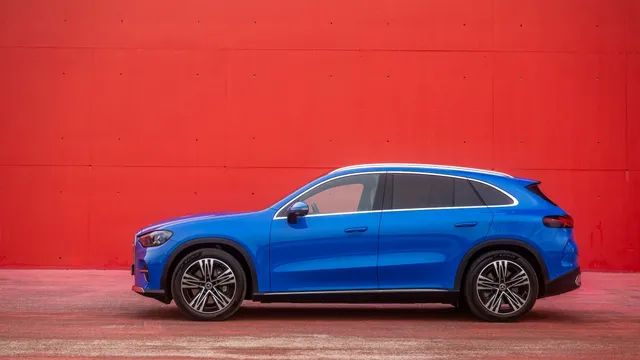
Mercedes-Benz sets ambitious goal for zero emissions and circular economy
Mercedes-Benz sets ambitious goal for zero emissions and circular economy
- The GLC 400 4MATIC with EQ Technology reduces carbon emissions by two-thirds compared to gas-powered models.
- Thirty-five percent emissions savings during production and substantial reductions in material carbon footprints are achieved.
- Mercedes-Benz is recognized for its sustainability efforts, promising a future focused on circular economy principles.
Story
Mercedes-Benz, a leading German automaker, has made notable strides in sustainability with its newly designed battery-electric GLC model. The emphasis on eco-friendliness has been critical in their design and engineering processes. The vehicle, known as the GLC 400 4MATIC with EQ Technology, boasts a significant reduction in carbon emissions, achieving a two-thirds decrease compared to its gas-powered predecessor. This transformation aligns with global sustainability targets set for 2026, highlighting the importance of reducing the automotive industry’s carbon footprint. In particular, Mercedes-Benz achieved important milestones during the production of the GLC. Notably, the company realized a 23% overall emissions reduction in the production phase and a 40% decreased carbon footprint per battery cell. This commitment extends beyond just production, as 66% of the aluminum used in the vehicle is sourced from renewable energy electrolysis or recycled materials. Additionally, the model incorporates five times more thermoplastic compared to earlier designs, underscoring an innovative approach to materials used in automotive manufacturing. The incorporation of thermoplastics—totaling approximately 661 pounds in the vehicle—shows Mercedes-Benz's dedication to using sustainable materials. Suppliers have contributed to producing 134 pounds of thermoplastic made from both pre- and post-consumer content, utilized in various components, from touchscreens to trunk liners. This shift hinges on the belief that resource management is vital to achieving a true circular economy and minimizing environmental impact. CEO Ola Källenius articulated his vision, emphasizing the step-by-step journey the automaker is embarking on towards zero emissions. The company's strategy includes increasing secondary materials in the production process and utilizing intelligent material combinations across all vehicles. Furthermore, their partnership with Norsk Hydro ASA aims to integrate aluminum with a significantly reduced CO2 footprint into future production lines. Mercedes-Benz's approach represents a comprehensive effort within the auto industry to meet sustainable goals while retaining luxury and performance, reflecting a new standard for vehicle manufacturing.


