

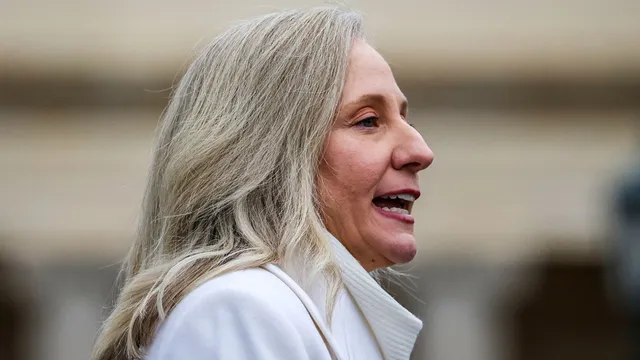
Virginia elects first female governor amid historic change
Virginia elects first female governor amid historic change
- Abigail Spanberger was inaugurated as Virginia's first female governor on January 17, 2026.
- She signed ten executive orders focused on key areas such as housing, healthcare, and education.
- Her election signifies a turning point for Virginia as it embraces progressive governance.
Story
On January 17, 2026, Abigail Spanberger was sworn in as the 75th governor of Virginia, marking a significant milestone in U.S. history as she became the first woman to hold this office in a state that has seen male governors for centuries. The ceremony took place at the Virginia State Capitol in Richmond amid inclement weather, symbolizing the transformative nature of her election. Spanberger, a Democrat, defeated Republican Winsome Earle-Sears, succeeding Governor Glenn Youngkin. Her victory comes in a period of heightened political activity in Virginia, as the state shifts towards a more progressive agenda. During her inauguration, Spanberger articulated the weight of her position, emphasizing the importance of responding to the challenges faced by Virginians. She noted the recklessness emanating from Washington, D.C., aligning her administration's focus on practical solutions to address the needs of families across the commonwealth. Spanberger reinforced her commitment to making Virginia a state that prioritizes affordability, education, and public safety. On her first day in office, Spanberger took immediate action by signing ten executive orders aimed at tackling pressing issues such as housing, healthcare, and community wellbeing. Among these measures was a directive to local law enforcement to focus on public safety rather than federal immigration enforcement, reflecting her administration's values of community care and inclusivity. The executive orders represent an intent to not only lower costs for Virginia households but also foster long-term progress in state policies. Spanberger's inauguration represents a broader political shift in Virginia, as Democrats, who gained control of the statehouse, are now poised to enact a bold agenda. Her lieutenant governor, Ghazala F. Hashmi, who made history as the first Muslim woman to hold statewide office in the U.S., stood alongside her, suggesting a new diversity in Virginia's leadership. Spanberger's actions on her first day reveal a determination to reshape Virginia's governance while reinforcing the importance of inclusive dialogue as she engages with constituents and stakeholders to address their needs.
Context
The history of women governors in the United States is a significant aspect of the broader narrative concerning women's roles in government and politics. The journey began in 1925 when Nellie Tayloe Ross of Wyoming became the first woman to serve as a governor in the United States. She set a precedent, demonstrating that women could hold high office, and paved the way for future generations. Following Ross, only a handful of women were elected as governors throughout the 20th century, slowly increasing in number, but it wasn't until the late 20th and early 21st centuries that female gubernatorial representation began to see substantial growth. The involvement of women in governance during this time often coincided with broader social movements advocating for gender equality, such as the feminist movement of the 1960s and 70s, which challenged traditional gender roles and encouraged women to pursue political careers. As of 2020, a notable milestone was reached when twenty women held the position of governor or territorial governor in the United States. This surge can be attributed to various factors, including changing societal attitudes towards women in leadership roles, as well as the political mobilization of women and increased visibility of female candidates. For instance, in 2018, a record number of women ran for governor, and several states elected women to this office for the first time, such as Tina Kotek in Oregon and Michelle Lujan Grisham in New Mexico. This trend marked a transformative period in American politics and was indicative of the shifting landscape regarding women’s participation at the highest levels of government. Women governors have brought diverse perspectives and priorities to their offices, addressing issues such as healthcare, education reform, and gender equity. They often emphasize collaboration and consensus-building, reflective of their experiences in navigating predominantly male political environments. The policy impacts and leadership styles of women governors can vary widely, influenced by their party affiliation, regional issues, and personal experiences. The success stories of women like Sarah Palin, Condoleezza Rice, and Jan Brewer have inspired a new generation of female leaders, showcasing the potential for women to excel in high-stakes political environments. In summary, the history of women governors in the United States illustrates a gradual but remarkable evolution in women's political representation. With each election cycle, the visibility and influence of women in governance continue to expand, fostering the ongoing dialogue about equality and representation in American politics. The progression from Nellie Tayloe Ross to the current crop of female governors underscores the importance of perseverance and the impactful role women can have in shaping public policy and leading their states. As society continues to evolve, it is imperative to support and promote female leaders in politics, ensuring that their voices and contributions are recognized as integral to the democratic process.


