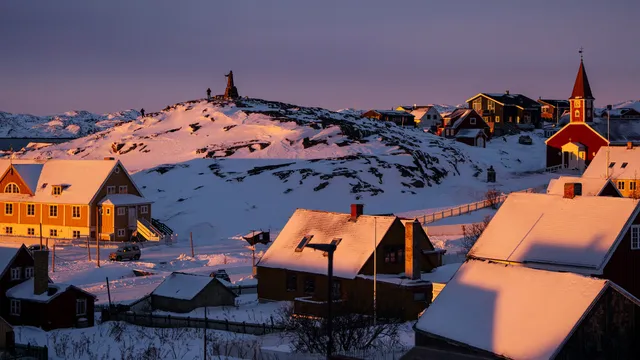
The relationship between the United States and Denmark has significant implications for Arctic security, particularly as geopolitical tensions mount and climate change accelerates the melting of Arctic ice, opening new shipping routes and resource opportunities. Denmark's ownership of Greenland, a semi-autonomous territory, places it at the center of Arctic governance, where U.S. strategic interests align with those of Denmark in maintaining stability and security in the region. The U.S.-Denmark partnership is crucial for operational capabilities and intelligence sharing to address potential threats in the Arctic stemming from increased military activities from Russia and the growing influence of China.
In recent years, the Arctic has seen a surge in interest from multiple nations, leading to heightened competition over resources, routes, and territorial claims. The U.S. has recognized Denmark's key role in Arctic policy and defense, strengthening military cooperation through joint exercises and the establishment of both countries as important players in NATO’s northern strategy. Collaborative efforts are particularly focused on issues such as search and rescue operations, environmental protection, and scientific research, which are vital for preserving Arctic integrity in the face of new threats. By leveraging this partnership, the U.S. can better defend its strategic interests while bolstering Danish capabilities to deter potential aggressors in the region.
The strategic importance of Greenland to the U.S. cannot be overstated, as it serves as a critical location for military bases and operations. The Thule Air Base is particularly vital, providing early warning systems and surveillance capabilities to monitor Russian activities in the Arctic. The growing military presence of Russia, especially the modernization of its Northern Fleet and expansion of bases in the region, poses challenges that require a coordinated response from the U.S. and Denmark. In this context, it is essential for the U.S. to maintain robust diplomatic channels with Denmark to ensure that both nations can address these security challenges effectively while fostering sustainable development of Arctic resources.
As climate change continues to alter the Arctic landscape, cooperation between the U.S. and Denmark will be pivotal in framing future Arctic governance. Just as important as militaristic strategies are collaborative efforts in environmental stewardship and sustainable development. Both nations must work together with Arctic indigenous communities and other nations with interests in the region to ensure that resource exploitation occurs responsibly and with consideration for the area's fragile ecosystem. The preservation of peace and stability in the Arctic region will depend on continued engagement between the U.S. and Denmark, reflecting shared values of democracy and mutual respect that can counteract unilateral aggressive policies from outside actors.