

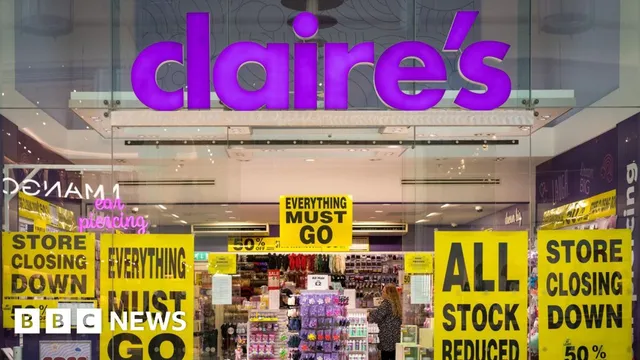
Claire's shuts down all stores in the UK and Ireland, losing 1,300 jobs
Claire's shuts down all stores in the UK and Ireland, losing 1,300 jobs
- Claire's has shut down all its standalone stores in the UK and Ireland due to financial troubles.
- Over 1,300 employees have been notified of redundancy amidst increasing competition and changing consumer preferences.
- The closure underscores a significant shift in retail dynamics and consumer behavior in the current market.
Story
In late April 2026, all Claire's standalone stores in the UK and Ireland ceased trading due to severe financial difficulties, culminating in the loss of 1,300 jobs. This decision was made after the chain fell into administration on two occasions within a year, primarily driven by economic pressures and changes in consumer behavior. The company cited alarming low Christmas sales in 2025 and a challenging high street environment as contributing factors to its vulnerabilities. Despite efforts from its previous owners, consumer preferences continued to shift towards online shopping, particularly with competitors like Shein and Temu, further straining the brand’s financial position. Fashion experts observed that the once-popular novelty items offered by Claire's have fallen out of favor with the current generation, who are more influenced by social media trends than by traditional retail offerings. Brand loyalty faded as younger consumers began to explore diverse spending options, leading to competition not just from other jewelry and accessories retailers, but also from an expanded array of lifestyle and dining experiences. In addition to the closure of its UK and Ireland stores, Claire's US operations have faced their own struggles, having filed for bankruptcy twice, in 2018 and again in 2025, indicating a broader trend of challenges facing the brand. Analysts pointed out that Claire's reliance on impulse purchases in physical retail locations made it especially vulnerable to shifts toward online shopping, a trend accelerated by the COVID-19 pandemic. Increasing operating costs, including rising business rates and staffing costs, compounded these difficulties. Experts believe that without substantial changes to its retail model and product offerings, the chances of successfully attracting the younger demographic back into stores were slim. The culmination of these factors led to a complete shutdown of the brand’s standalone outlets, a sweeping end for a retail chain that once thrived by capturing the childhood nostalgia of many consumers. The fallout from these closures not only affects employees but also reflects a significant shift in retail dynamics, showcasing how quickly trends can change in an era driven by online interaction and social media influence. Claire's failure to adapt to these evolving market conditions illustrates the precarious nature of the high street retail environment today, where companies must innovate or risk falling behind. The closure of all stores signifies a pivotal moment for retail, challenging other brands to rethink their strategies in a rapidly changing landscape.
Context
The impact of online shopping on the retail industry has been profound and transformative, normalizing a paradigm shift that has altered how consumers interact with brands and products. The advent of the internet has enabled retailers to reach global markets, allowing shoppers to browse and purchase products from the comfort of their homes at all hours. This convenience has led to a significant increase in consumer expectations regarding availability and pricing, creating a highly competitive environment for traditional brick-and-mortar stores. Retailers who have traditionally relied on physical locations are increasingly compelled to establish an online presence to retain market share and remain relevant in this rapidly evolving landscape. In the early 2020s, the COVID-19 pandemic further accelerated the growth of online shopping, as lockdowns and health concerns forced consumers to turn to e-commerce platforms for their shopping needs. Consequently, many retailers were compelled to enhance their digital capabilities, invest in robust logistics networks, and improve the overall customer experience online. This shift not only impacted large retailers but also small businesses that embraced e-commerce, allowing them to expand their reach and compete in ways that were previously unattainable. The introduction of advanced technologies, such as artificial intelligence and data analytics, has enabled retailers to personalize shopping experiences, recommend products based on consumer behavior, and optimize inventory management. Despite the advantages of online shopping, certain challenges have also emerged. Traditional retailers have faced increased pressure to innovate and adapt or risk losing customers to online competitors. Many have opted to implement an omnichannel approach, integrating both online and offline experiences to provide seamless customer interactions. This has included services such as buy online, pick up in-store (BOPIS), and enhanced returns processing, which bridge the gap between digital and physical shopping. Additionally, the rise of social media has also created a new avenue for retail marketing and sales, as businesses leverage platforms to engage consumers and drive traffic to their online stores. As we move further into the decade, the consequences of online shopping on the retail industry will continue to evolve. Sustainability and ethical consumption are increasingly important to consumers, leading many retailers to prioritize eco-friendly practices and transparent supply chains. This shift may reshape the retail landscape yet again, as businesses that align with consumer values stand to gain market advantages. The future of retail will likely hinge on a hybrid approach, embracing both online and offline strategies while focusing on customer-centric solutions that anticipate and meet the needs of consumers in an ever-dynamic marketplace.


