

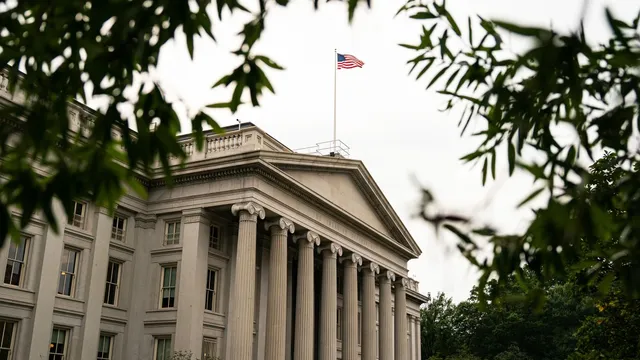
U.S. bonds yield spikes amid rising oil prices and inflation fears
U.S. bonds yield spikes amid rising oil prices and inflation fears
- Crude oil prices jumped over 4% on May 15, 2026, boosting inflation concerns.
- The U.S. Treasury sold $25 billion in 30-year bonds, yielding 5%, the highest since 2007.
- Rising yields and falling stock markets indicate growing investor anxiety about economic stability.
Story
On May 15, 2026, the global financial landscape experienced significant turmoil, primarily influenced by geopolitical tensions stemming from the ongoing Iran war. Prices of crude oil surged dramatically, leading to a sharp sell-off in government bonds worldwide. The yield on a 30-year U.S. Treasury bond climbed above 5.12%, marking its highest level in nearly a year and indicating increased investor wariness. The 10-year Treasury note saw a similar trend, reaching approximately 4.56%, the highest since mid-May of the previous year. This surge in yields can be attributed to escalating oil prices, which climbed more than 4% on that Friday, pushing the average unleaded gas price over $4.50 per gallon, a significant rise since the Iran war began. The geopolitical environment was further complicated by unclear outcomes from a recent U.S.-China summit regarding trade relations and export controls on critical goods, including semiconductors, which the markets had initially viewed as hopeful but soon grew skeptical about. The bond market's negative sentiment was echoed in the stock markets, where major indices like the S&P 500 and Nasdaq Composite experienced sharp declines. European markets followed suit, with significant drops noted across various indexes. This situation highlights a broader issue of inflationary pressures, as the Consumer Price Index for April was reported at its highest level in three years, reinforcing concerns that inflation might not be a temporary phenomenon but rather a persistent challenge that could impact future monetary policy decisions by the Federal Reserve. Therefore, higher yields on Treasury bonds not only raise interest costs but also exacerbate existing budget deficits and increase the debt burden for the U.S. government. Officials like Treasury Secretary Scott Bessent and Fed Governor Chris Waller expressed caution about the inflation outlook, suggesting that more rigorous policies might be required to bring inflation back to target levels. The prevailing uncertainty surrounding both the stability of oil prices and the broader implications of ongoing geopolitical conflicts suggests that investors and consumers alike should prepare for a potentially prolonged period of volatility in financial markets and economic conditions.
Context
The impact of oil prices on the U.S. economy is a significant topic of research, given the country's substantial dependence on oil as an energy source and the intertwining of the oil market with economic performance. When oil prices rise, it typically leads to higher costs for consumers and businesses, resulting in increased inflationary pressures. Consumers begin to feel the pinch at the gas pump, influencing their disposable income and spending patterns. Higher oil prices can also raise transportation and production costs for businesses, which often leads to decreased profit margins and, subsequently, may result in reduced investment and hiring. These changes can have a dampening effect on overall economic growth, as consumer spending accounts for a significant portion of the U.S. GDP. Thus, fluctuations in oil prices have a direct and often profound influence on economic activity across various sectors in the country, particularly those heavily reliant on oil and energy inputs. Conversely, when oil prices decrease, the U.S. economy may experience a boost in consumer spending and business investment. Lower oil prices can result in lower transportation costs, which can make goods and services cheaper for consumers. This decrease in costs can free up disposable income for consumers, stimulating demand for other goods and services, a crucial driver of economic growth. Moreover, businesses may find relief in their operational costs, potentially prompting new investments, expansion plans, and job creation. The overall sentiment tends to improve when facing lower oil prices, promoting economic stability and increasing consumer confidence. However, the relationship between oil prices and the economy is complex and is influenced by multiple factors, including geopolitical developments, trade policies, and technological advancements in energy extraction and production. Sudden spikes in oil prices often correlate with geopolitical tensions in oil-producing regions, which create uncertainty in the market. Similarly, advancements in alternative energy sources have the potential to disrupt the traditional relationship between oil prices and economic performance. As the U.S. increasingly invests in renewable energy and reduces its reliance on oil, the economy may become less sensitive to oil price volatility in the long run. Lastly, it's essential to consider the role of oil prices in shaping U.S. foreign policy and international relations. The nation's energy security directly influences its geopolitical strategies, affecting trade relationships and involvement in foreign conflicts. The broader implications of oil price variations extend beyond economic metrics, making this topic nuanced. Policymakers must navigate this landscape through viable energy strategies while ensuring economic resilience to both price surges and downturns in the oil markets.


