

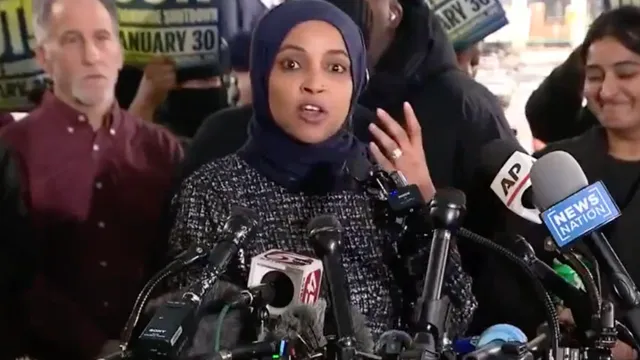
Ilhan Omar claims Trump’s obsession fuels death threats against her
Ilhan Omar claims Trump’s obsession fuels death threats against her
- Ilhan Omar experienced an increase in death threats after Trump's remarks about her.
- She was sprayed with a foul-smelling liquid during an event hours after Trump's criticism.
- Omar claimed Trump's obsession with her contributes to the threats she receives.
Story
In the United States, Congresswoman Ilhan Omar has faced a surge in threats against her life, which she attributes to the hateful rhetoric used by President Donald Trump. This situation escalated after a rally in Iowa where Trump publicly criticized Omar, suggesting that she does not represent American values and is associated with a country that is a disaster. Shortly after Trump's comments, Omar was attacked in her home state of Minnesota, when an individual sprayed her with an unknown liquid during an anti-ICE speech. Omar highlighted that the assailant seemed motivated by Trump's immigration policies targeting Somalis, which reflects the dangerous consequences of his inflammatory statements. In response to the rhetoric from Trump, Omar expressed that her need for high-level security is directly linked to the president's obsession with her. She emphasized that if Trump were not so focused on her, she might not require such protection. Omar pointed out the irony of Trump's claims that he does not think about her while he has dedicated significant time attacking her in public speeches. She also accused him of inciting violence against her and others in her community through his comments. The congresswoman made it clear that the lack of security threats she experienced during the Biden presidency starkly contrasts with the current situation. Omar further noted that violent threats aimed at her significantly increased after Trump made derogatory remarks about her and the communities she represents. Each instance of Trump using hateful language towards her correlates with a spike in death threats. This connection between political rhetoric and personal safety raises serious concerns over the impact of public discourse on the lives of politicians, especially those representing marginalized communities. Her case exemplifies the broader issue of political violence and hate speech that continues to pervade the political landscape in America. The consequences of such rhetoric not only reflect on the individual safety of lawmakers but also signal a troubling acceptance of hostility in political discourse. As Omar continues to navigate this heightened risk, she calls upon the necessity of accountability for those in positions of power who perpetuate hate. The ongoing dialogue about immigration, representation, and safety remains crucial as the political climate evolves and as more representatives begin to speak out against threats and violence fueled by divisive language.
Context
Political rhetoric has become an increasingly influential force in shaping public sentiment and behavior, particularly as it pertains to personal safety. In recent years, the rise of divisive language and extreme narratives in political discourse has had tangible effects on the perception of safety among individuals and communities. Politicians and public figures wield rhetoric that often polarizes opinions, fuels animosity, and creates a climate of fear or uncertainty. This can lead to heightened tensions in society, prompting individuals to feel less secure in their daily lives, particularly among marginalized groups who may feel specifically targeted by inflammatory comments or policies. The relationship between political rhetoric and personal safety is complex and often cyclical. On one hand, irresponsible or inflammatory speech can incite violence and encourage aggressive actions among supporters. Historical instances, such as hate crimes spiking following particular political events or statements, underscore the potential real-world impacts of rhetoric. On the other hand, when political leaders utilize empowering or inclusive language, they can foster a sense of community and solidarity, thereby enhancing feelings of safety and belonging among citizens. Effective and responsible communication can decrease fear, reduce tensions, and create a more cohesive society. Research indicates that the implications of political rhetoric extend beyond immediate reactions; they can have lasting impacts on social infrastructure and community dynamics. Communities that feel threatened by prevailing political narratives might experience increased social fragmentation, as trust wavering amongst residents can lead to isolation and disengagement. Furthermore, the psychological stress that accompanies a perception of danger or hostility can harm individual well-being, leading to heightened anxiety and mental health issues, which in turn can affect physical health outcomes. Thus, the nuances of political messaging are instrumental in framing how individuals perceive their environments and their safety within them. Moving forward, the responsibility lies not only with political leaders and commentators but also with the public to critically evaluate the rhetoric they consume and share. By engaging in constructive dialogue that prioritizes respectful exchange over divisive commentary, communities can strive to mitigate the adverse effects of harmful rhetoric. It is imperative for policymakers, educators, and citizens to advocate for narrative strategies that promote understanding and safety, ultimately reinforcing community resilience and fostering an environment where all individuals feel secure and valued.


