

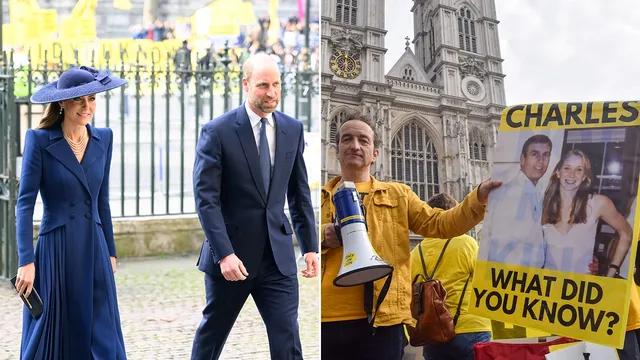
Protesters confront royal family over Andrew Mountbatten-Windsor issues
Protesters confront royal family over Andrew Mountbatten-Windsor issues
- Anti-monarchy protesters confronted the royal family with chants and signs.
- Public dissatisfaction is growing regarding the royal family's handling of Andrew Mountbatten-Windsor.
- This event indicates a significant moment for the royal family amidst ongoing scrutiny and calls for transparency.
Story
On March 9, 2026, members of Britain's royal family were met with loud protests as they arrived for the annual Commonwealth Day service at Westminster Abbey. The protest was organized by an anti-monarchy group called Republic, who were expressing their discontent over the monarchy's handling of Andrew Mountbatten-Windsor, formerly known as Prince Andrew. The group displayed bright yellow signs with messages like 'Not my king' and 'Abolish the monarchy,' reflecting a growing sentiment against the institution, particularly in light of ongoing controversies surrounding Andrew, including his past associations with Jeffrey Epstein and allegations of misconduct. King Charles III, along with Queen Camilla, the Prince and Princess of Wales, attempted to maintain composure and did not directly address the protesters upon entering the church. Instead, they focused on engaging with church officials while the protests intensified outside. This event marks the royal family's largest public gathering since Andrew's arrest, which had drawn significant media scrutiny and public interest, putting heightened pressure on the royal family's image and their public relations strategies. The royal family has faced increasing calls for transparency and accountability concerning Andrew’s alleged misdeeds and their implications for the monarchy. While Andrew has denied any wrongdoing, public figures and citizens alike question how much awareness and knowledge senior royals, including King Charles and his son William, had regarding Andrew’s actions. The protest was characterized by chants directed at the royals, questioning their awareness of the ongoing issues and demanding evidence of accountability from the monarchy. Graham Smith, the CEO of Republic, expressed concerns that both William and Charles had serious questions to answer about their previous knowledge of the matters involving Andrew. The anti-monarchy sentiment has seemed to gain traction over the years, with this particular protest being seen as a culmination of growing dissatisfaction with royal transparency. Observers noted that public attitudes are rapidly shifting, with calls for more openness from the royal family as they face a particularly turbulent moment in their history. Despite some attempts from members of the royal family to express concern for the victims involved, many believe that further action is required to address public concerns adequately and to counter the protest sentiments proliferating around them.
Context
The public opinion on monarchy in the UK reflects a complex tapestry of sentiments, shaped by historical context, current events, and societal values. As of recent studies and surveys leading up to 2026, a significant portion of the UK population continues to express support for the monarchy, valuing it as an integral part of British heritage and identity. Many citizens associate the monarchy with tradition, stability, and national pride, which plays a crucial role in the overall acceptance of the royal institution. Support for the monarchy often peaks during significant events such as royal weddings, jubilees, and national celebrations, showcasing its ability to unify the nation around shared cultural landmarks. However, this support is not uniform across demographics or regions, often influenced by factors such as age, socio-economic status, and education level. Younger generations, in particular, tend to exhibit more skepticism toward the monarchy, questioning its relevance in modern society and advocating for a more democratic and egalitarian system of governance. Additionally, the royal family's actions and scandals have the potential to sway public opinion either positively or negatively, resulting in fluctuations in support levels. The monarchy's role has also come under scrutiny in light of broader societal movements, including discussions surrounding race, gender, and class. Recent events, such as the controversy surrounding Prince Harry and Meghan Markle, have amplified debates about the monarchy's future and its ability to adapt to contemporary values. Public opinion data indicates a significant divide between traditionalists who staunchly defend the monarchy's continuation and reformists advocating for profound changes or an abolition of the institution entirely. This division illustrates that while many still view the monarchy as a symbol of continuity, others perceive it as outdated and detached from the realities faced by ordinary citizens. Furthermore, the impact of social media cannot be overstated, as platforms have become venues for expressing opinions and mobilizing movements that can influence the royal family's public image and perceived legitimacy. Amid these challenges, the monarchy has recognized the need to evolve and engage more directly with the public to maintain its relevance. Initiatives aimed at modernization, such as community outreach programs and transparency efforts, are being implemented to bridge the gap between the royal family and the public. Moreover, the institution is increasingly addressing its historical ties to colonialism and working towards a more inclusive narrative that reflects the diverse identities within the UK. As the monarchy stands at a crossroads, it must navigate these challenges while also retaining the support of its traditional base. The pressing question remains whether it can successfully reconcile its historical roots with the demands for accountability and modern values from a changing society. Looking ahead, it is evident that the monarchy will continue to face scrutiny and debate concerning its validity and future role in British governance. The dynamics of public opinion are likely to remain fluid, influenced by both national sentiment and global trends. Research highlights the necessity of ongoing dialogue surrounding the future of the monarchy, emphasizing the importance of engaging younger populations to ensure the institution remains relevant. The next few years may prove pivotal in determining the monarchy's trajectory, as it grapples with both internal challenges and external pressures for reform. As the United Kingdom evolves further into the 21st century, the monarchy's ability to adapt will ultimately influence public sentiment and its place in the nation's heart.


