

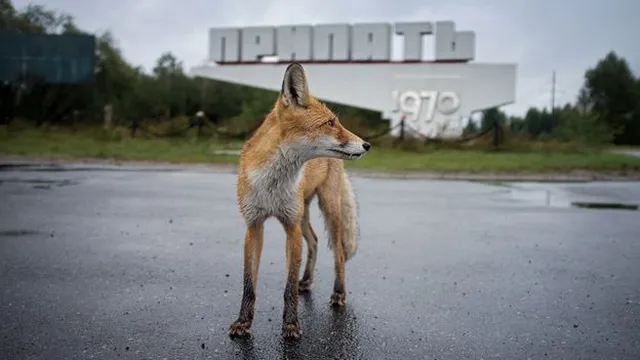
Chernobyl's wildlife adapts to radiation and its aftermath
Chernobyl's wildlife adapts to radiation and its aftermath
- The Chernobyl disaster in 1986 resulted in an evacuated exclusion zone that has become a unique wildlife habitat.
- Recent studies indicate that wildlife, such as frogs and bank voles, exhibits adaptations potentially influenced by the altered environment and radiation exposure.
- The ongoing influence of climate change adds further stress to wildlife living in and around Chernobyl, complicating survival challenges.
Story
In April 2026, it will be 40 years since the Chernobyl disaster occurred in Ukraine, where a catastrophic reactor explosion took place in 1986. Following the explosion, the surrounding area was evacuated, resulting in a sparsely populated exclusion zone. Research conducted in 2022 revealed intriguing findings regarding the local wildlife, particularly frogs, which showed darker pigmentation within the exclusion zone compared to those outside it. The increased melanin may provide a protective barrier against radiation, although the connection remains a hypothesis without conclusive evidence. The complex interplay between various environmental factors, including heavy metals, complicates the attribution of changes in wildlife directly to radiation exposure. In addition to frogs, studies on bank voles revealed they carry higher levels of genetic diversity in their mitochondria when living in contaminated areas versus those in non-contaminated regions. This finding suggests that wildlife in Chernobyl may have adapted in unforeseen ways to their new environment since the disaster, warranting further investigation into their evolution and survival strategies. Moreover, the area has seen ecological changes, such as the encroachment of birch trees, which have transformed the landscape and resulted in a different ecosystem, prompting wildlife to evolve differently than pre-disaster conditions. However, the notion that some species, such as fungi, might have evolved to utilize radiation as a growth energy source is regarded with skepticism by experts. The lack of sufficient hard evidence to support claims of evolutionary advantages directly attributed to radiation exposure raises questions about the complexities of environmental adaptations in a radically altered landscape. Some researchers advocate for thorough studies to assess whether any mutations in local flora and fauna post-1986 have persisted over successive generations, despite decreasing radiation levels. The influence of climate change intertwines with the legacy of Chernobyl, as recent findings have linked rising global temperatures to increasing stress on species like barn swallows in the region. The combination of heat from radiation and climate change creates new pressures, making survival increasingly challenging for these birds and other wildlife. Thus, the broader implications of the Chernobyl disaster extend beyond immediate radiation effects; they encompass significant shifts in biodiversity, adaptation processes, and future environmental challenges faced by wildlife in a post-nuclear landscape.
Context
The Chernobyl disaster, which occurred in 1986, resulted in the release of a significant amount of radioactive material into the environment, leading to widespread contamination of the area surrounding the nuclear power plant. Surprisingly, this catastrophic event has provided a unique opportunity to study how wildlife adapts to environments with high radiation levels. Research in the region has revealed fascinating insights into the resilience of various species, demonstrating their capacity to thrive in the face of environmental challenges. Various organisms, including mammals, birds, and insects, have been observed exhibiting significant changes in behavior, reproduction, and physiological mechanisms as a response to the new conditions created by the disaster. One of the key findings from studies conducted in the Chernobyl Exclusion Zone is that certain species have shown remarkable adaptability in terms of habitat preferences and behaviors. For instance, some bird species have altered their nesting sites to areas with lower radiation levels, while others seem to exhibit changes in migratory patterns. These adaptations are believed to be driven by natural selection, as individuals that can avoid radiation or tolerate its effects are more likely to survive and reproduce. Additionally, researchers have observed changes in reproductive strategies in various species, with some animals showing earlier breeding seasons or increased litter sizes as a potential survival mechanism. The genetic studies of Chernobyl wildlife have also provided enlightening results. Scientists have begun to understand how the presence of radiation has influenced mutation rates in certain species. While some mutations can be harmful, others might confer beneficial traits that enhance survival in a contaminated environment. For instance, the discovery of increased rates of certain beneficial phenotypic changes in populations suggests that the wildlife is undergoing rapid evolution in response to radiation exposure. Researchers are keenly studying these genetic adaptations, as they could offer insights into how organisms respond to extreme conditions and the potential long-term effects of radiation on biodiversity. In conclusion, the wildlife of Chernobyl has become a living laboratory for studying the adaptability of species to environmental stressors. The insights gained from this unique ecosystem can inform conservation strategies and enhance our understanding of resilience in the face of ecological challenges. As research continues, it will be crucial to monitor the long-term implications of these adaptations, both for the animals themselves and for the wider ecosystem that has emerged in the absence of human presence. This convergence of ecology, genetics, and evolutionary biology presents a rich area for ongoing research, with implications that may extend beyond Chernobyl to other regions affected by habitat destruction, pollution, and climate change.


