

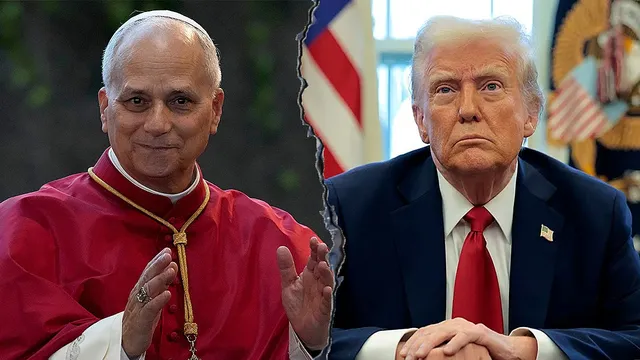
Pope Leo advises against military intervention in Venezuela
Pope Leo advises against military intervention in Venezuela
- Pope Leo warned Trump against military intervention in Venezuela, suggesting dialogue and economic pressure instead.
- Trump's administration considered various measures against Maduro, including military actions, amid accusations of drug trafficking.
- The Pope's stance emphasizes the importance of finding peaceful resolutions to avoid further escalation in Venezuela.
Story
In recent statements made during a news conference, Pope Leo, the first American pope, warned against the potential military intervention by the United States to remove Nicolás Maduro from the presidency of Venezuela. The context of this warning arises from escalating tensions between the U.S. government and the Venezuelan leader, who has been accused by President Trump of facilitating drug trafficking into the United States. In addition to the drug trade, Trump has linked Maduro's governance to the significant influx of Venezuelan migrants seeking refuge in the U.S., fleeing the ongoing economic crisis and political repression in their home country. On his first foreign trip, which included visits to Turkey and Lebanon, Pope Leo emphasized that the Trump administration should consider dialogue and economic sanctions instead of military force. He articulated his concerns following Trump’s recent announcement that the airspace around Venezuela would be considered
Context
The current situation in Venezuela is characterized by a deepening humanitarian crisis, ongoing political turmoil, and severe economic challenges. Over the past several years, the country has grappling with hyperinflation, which has led to a dramatic decline in the purchasing power of its citizens. Essential goods such as food and medicine have become increasingly scarce, resulting in widespread malnutrition and healthcare shortages. As a result, millions of Venezuelans have been forced to flee the country in search of better living conditions, creating one of the most significant migration crises in Latin America. The effects of this exodus are felt not only within Venezuela but also in neighboring countries that are struggling to accommodate the influx of refugees. The international community has been alerted to these issues, yet the response has varied greatly in effectiveness and support levels. Politically, Venezuela remains deeply divided and unstable. The government, led by President Nicolás Maduro, has faced ongoing allegations of authoritarianism, human rights abuses, and corruption. The opposition has struggled to unite against Maduro, and negotiations mediated by international bodies have often stalled or ended in failure. Election processes have been widely criticized for lacking transparency and fairness, with allegations of voter suppression and manipulation undermining democratic norms. These political dynamics complicate humanitarian aid efforts, as governmental control often denies access to international organizations seeking to provide support to those in need. Despite sanctions imposed by various countries, including the United States, the Maduro administration continues to cling to power, further exacerbating the struggles faced by Venezuelans. The economic landscape of Venezuela further illustrates the dire situation within the country. The plummeting oil prices in recent years have severely impacted government revenues, as the economy is heavily reliant on oil exports. In addition to economic mismanagement and corruption, this decline has led to budget deficits and rampant inflation rates. The country's GDP has contracted sharply, and the currency, the bolívar, has seen a dramatic devaluation. New economic sanctions aimed at the oil sector and government officials have only worsened the situation, limiting the government's ability to finance essential services and infrastructure. Attempts to stabilize the economy through reforms have been met with resistance, and many citizens are left to rely on informal economies to survive. In conclusion, the current situation in Venezuela is a complex interplay of humanitarian, political, and economic crises, with far-reaching implications. The humanitarian needs are vast, with millions in need of assistance as malnutrition and lack of medical care threaten lives. Political instability and a lack of engagement from both domestic actors and international entities contribute to a cycle of despair. The economic conditions continue to deteriorate, making it critical for the international community to address not only the immediate humanitarian needs but also the underlying political and economic issues that perpetuate the crisis. A collaborative approach is necessary to support the Venezuelan population and work towards a sustainable resolution.


