

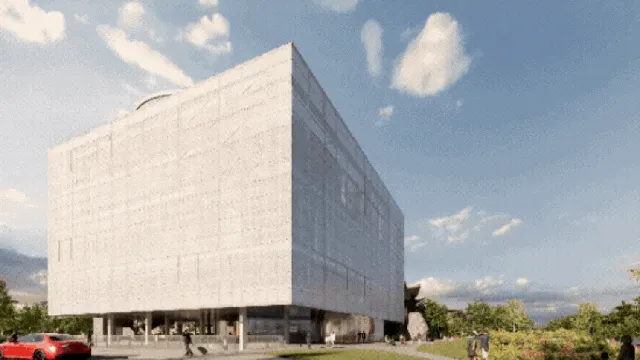
Meitu Cube Visual Arts Center showcases innovative, adaptable design
Meitu Cube Visual Arts Center showcases innovative, adaptable design
- The groundbreaking ceremony of the Meitu Cube Visual Arts Center took place in late April 2026, following the completion of excavation.
- It features a unique double-skin facade that can adjust to enhance airflow and reduce solar heat.
- The project aims to serve diverse cultural functions while embodying the architectural ethos of adaptability.
Story
In late April 2026, construction began on the Meitu Cube Visual Arts Center in China, designed by OPEN Architecture for Meitu Inc. This cultural hub, overlooking Xiamen's East Rim, is a cube-shaped building intended to adapt to shifting cultural needs and technological advancements. With a unique folding double-skin facade, the structure can open and close, reducing solar heat while allowing for natural ventilation and filtered light. Expected to be completed by 2028, the center is part of a broader trend in China towards dynamic architecture that responds to cultural evolution. The firm, OPEN Architecture, delved into the philosophical aspect of adaptability, stating their inquiry into architecture's ability to change alongside society's evolving needs. The center is conceptualized not just as a static building but as a participant in a constantly transforming landscape, enabling various functionalities from exhibitions to performances. The design methodology considered a wide array of possibilities instead of sticking to a rigid format, which underlines the ethos of flexibility in contemporary architectural practice. Architects have been challenged to address the rapid transformation occurring in society, with technology and cultural standards continually shifting. In response to these questions, the Meitu Cube's design seamlessly integrates a series of configurable exhibition spaces, a library, and terraces, all amenable to multifunctional uses. This innovative approach is reflected in the building's structure and aesthetics, aiming to provide a platform that fosters a diverse range of cultural activities. Additionally, the incorporation of materials like PTFE for its facade highlights a commitment to durability and functionality, aligning with modern needs for sustainability and efficiency in architecture. In the context of continuing urban transformations in China, such adaptive buildings are becoming essential, emphasizing that architecture must evolve to maintain relevance. As the project moves forward, it represents a significant marker for the intersection of architecture and cultural responsiveness, positioning it as a noteworthy development in China's architectural narrative.


