

US geological survey sends false earthquake alert in Nevada and California
US geological survey sends false earthquake alert in Nevada and California
- On December 3, 2025, a false earthquake alert issued by the US Geological Survey caused widespread panic among residents.
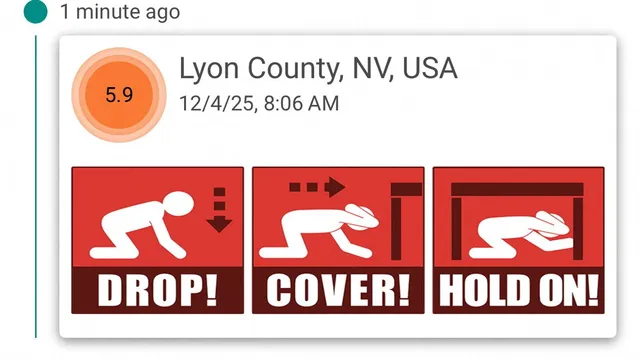
- The alert reported a 5.9-magnitude quake near Dayton, Nevada, but local law enforcement found no signs of seismic activity.
- Experts believe this unprecedented false alert may be linked to human-made disturbances or natural vibrations.
Story
On December 3, 2025, an earthquake alert was sent out by the US Geological Survey (USGS), warning of a 5.9-magnitude earthquake near Dayton, Nevada. This alert was disseminated widely, with many residents in the San Francisco area, located approximately 180 miles away, also receiving the notification. However, multiple law enforcement agencies in the vicinity of the suspected epicenter did not report any signs of an earthquake, raising questions about the validity of the alert. Yaareb Altaweel, a representative from the National Earthquake Information Center in Colorado, noted that this incident marks the first confirmed occurrence of such a false alarm in the system’s history. Unexpectedly, the alert caused considerable concern among residents, particularly those who are accustomed to taking quick safety measures such as “drop, cover, hold on” in the event of an actual earthquake. With 5.9-magnitude earthquakes typically causing noticeable ground shaking and potential minor property damage, the assumption was that serious seismic activity had occurred. Seismologists from the Berkeley Seismological Laboratory confirmed they had never encountered a completely false alert before, indicating that this was an unprecedented event within the automatic warning system. Various theories have since been proposed regarding the potential triggers for the inaccurate alert. Some experts suggest that “noisy triggers”—which are sudden disturbances from human-made sources such as construction work or larger moving vehicles—could have led to the system detecting unusual vibrations and erroneously identifying them as an earthquake. In contrast, natural phenomena, including ocean waves or wind, can also create vibrations that may confound detection systems. The calibration and maintenance of automatic detection systems are vital for ensuring accurate earthquake warnings to minimize unnecessary panic. This incident serves as a reminder of the importance of technological reliability in disaster preparedness systems. Communities affected by earthquakes rely heavily on accurate alerts to protect lives and property. The unanticipated nature of this false alarm has highlighted potential vulnerabilities within the early warning systems and calls into question their operational protocols. Moving forward, additional scrutiny may be necessary to ensure that such mistakes do not occur again, emphasizing the need for comprehensive testing and improvement of earthquake warning mechanisms to prevent future misunderstandings.


