

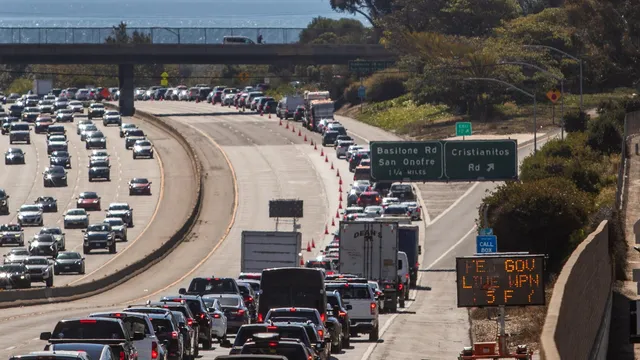
Border Patrol uses secret surveillance program on millions of American drivers
Border Patrol uses secret surveillance program on millions of American drivers
- A network of cameras records vehicle license plate information and employs algorithms to identify suspicious travel patterns.
- Drivers flagged as suspicious are often stopped and searched based on these patterns, sometimes without just cause.
- These surveillance practices have raised serious concerns regarding privacy and civil liberties among legal experts and advocates.
Story
In recent years, the U.S. Border Patrol has expanded its surveillance activities beyond traditional border security measures, utilizing a network of cameras to monitor ordinary American drivers for suspicious travel patterns. This covert program employs algorithms to analyze vehicle movements, flagging those deemed suspicious based on their travel routes and destinations. Reports suggest that these practices, which have provoked concerns among civil rights advocates, support a broader shift in U.S. Customs and Border Protection's approach to law enforcement, transforming it into a more intelligence-driven operation rather than limiting operations to the immediate vicinity of borders. The development of this surveillance program has resulted in partnerships between federal agencies and local law enforcement across various states, where agencies have shared resources and information. For instance, thousands of commercial license plate readers have been integrated into the Border Patrol's intelligence network. Many local jurisdictions have received federal funding to implement their own license plate reading systems, which are sometimes utilized at the request of federal agencies. This interlinking of technologies has led to an increase in the volume of facial recognition capabilities and surveillance data, further distancing the operations from traditional border enforcement. Concerns regarding civil liberties have been compounded by reports of aggressive questioning and searches resulting from data flagged through this surveillance. At times, innocent drivers have been subjected to searches based on their travel patterns, creating a sense of widespread monitoring reminiscent of a dragnet surveillance approach. The historical context of this shift can be traced back to the post-9/11 era, when national security concerns heightened and law enforcement agencies began adopting more intrusive technologies. Collaborations among federal, state, and local agencies exemplify this trend. As reports have surfaced over the use of this surveillance technology, privacy advocates have called into question the legality and ethical implications of such broad surveillance practices. Legal experts warn that the expansive nature of the data collection may violate constitutional protections against unreasonable searches and ensure a chilling effect on the privacy rights of the public. As authorities grapple with balancing national security and civil liberties, the future of such surveillance initiatives remains highly debated and contentious.
Context
Surveillance has become an integral part of the national security strategy in the United States, particularly following events such as September 11, 2001. While the primary intent of surveillance is to protect the public from threats, it raises significant concerns about civil liberties. The intersection of governmental surveillance practices and individual privacy rights is a contentious issue, often leading to heated debates about the balance between security and freedom. The expansion of surveillance technology—including digital monitoring, data collection, and mass surveillance programs—has prompted civil rights advocates to warn against overreach and potential abuse of power. One of the most significant pieces of legislation affecting surveillance in the U.S. is the USA PATRIOT Act, enacted in the wake of the 9/11 attacks. This act expanded the government’s ability to surveil individuals without warrant under specific conditions. Critics argue that such laws undermine the constitutional rights guaranteed by the Fourth Amendment, which protects citizens against unreasonable searches and seizures. The consequences of these surveillance practices often disproportionately affect marginalized communities, raising social justice concerns that echo throughout various civil liberties movements. Advocacy groups have tirelessly worked to highlight these issues, arguing that unchecked surveillance can lead to a chilling effect on free speech and the right to assemble. The rise of technology has played a critical role in how surveillance is conducted. The proliferation of social media, smartphones, and IoT devices has created a landscape where personal data is constantly collected and analyzed. This evolution has resulted in invasive surveillance techniques that can track individuals’ movements, communications, and habits without their explicit consent. Additionally, the use of artificial intelligence in surveillance tools increases the capacity for monitoring, leaving individuals vulnerable to misidentification and profiling. These developments have raised profound ethical questions about who is being surveilled and why, as well as how this data is used by both public and private entities. In response to public outcry and court rulings questioning the legality of certain surveillance practices, the government has made attempts to reform surveillance policies, albeit incrementally. Initiatives to increase transparency and accountability, such as the USA FREEDOM Act, aim to address some of the concerns related to mass data collection. Nonetheless, the tension between state interests and individual rights continues to be a central theme in discussions about surveillance in the U.S. The future of civil liberties in relation to surveillance practices will depend on ongoing public discourse, legal challenges, and the persistent efforts of civil rights organizations to advocate for enhanced privacy protections in an age of ever-increasing technological surveillance.


