

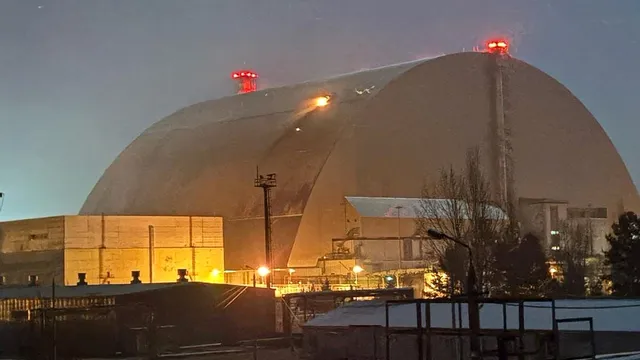
Chernobyl plant shield fails after drone attack
Chernobyl plant shield fails after drone attack
- The Chernobyl power plant's outer shell was damaged by a drone strike in February 2022, compromising its safety infrastructure.
- Despite the breach, radiation levels in the vicinity have remained stable, as the inner containment shell was not affected.
- Comprehensive restoration is necessary to prevent further degradation and ensure long-term safety at the facility.
Story
In February 2022, the Chernobyl power plant in Ukraine was damaged by a Russian drone strike, resulting in a breach of its outer protective shell. This incident occurred during the early weeks of Russia's invasion of Ukraine, which led to the temporary occupation of the plant and surrounding areas by Russian forces. The International Atomic Energy Agency (IAEA), led by Director Rafael Grossi, conducted an inspection shortly after the strike and confirmed that the outer shell, built in 2016, lost its ability to confine radioactive materials, posing a potential risk for future radiation leaks. Notably, radiation levels at the site remained unchanged as the inner containment shell was not breached. Since the catastrophic nuclear disaster in 1986, which claimed the lives of 31 people and spread radiation across Europe, the plant has been under scrutiny. Although repairs have been attempted since the drone attack, Grossi emphasized the need for comprehensive restoration efforts to ensure long-term safety and prevent further degradation of the facility. The drone strike also ignited a fire near reactor number four, emphasizing the precarious situation at the site. Grossi's warnings indicate a growing concern regarding safety at the plant, which lies about 130 kilometers north of Kyiv. The surrounding territories have remained points of contention as both Ukraine and European allies accuse Russia of recklessness around nuclear sites, putting broader regional safety at risk. Additionally, the Zaporizhzhia Nuclear Power Plant, currently occupied by Russian forces, has been highlighted as another major concern. It is critical that these reactors receive reliable power for cooling to prevent catastrophic incidents involving spent fuel and non-operational reactors.


