

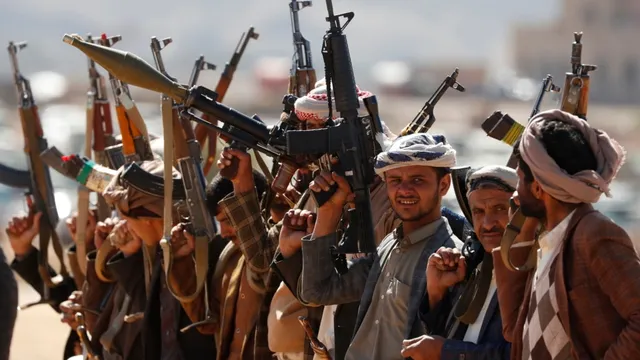
Houthi rebels poised to escalate conflict in Red Sea
Houthi rebels poised to escalate conflict in Red Sea
- The Houthi rebels have indicated they are ready to engage in retaliatory actions concerning maritime trade.
- Saudi Arabia has redirected oil exports to mitigate disruptions from the conflict.
- Should the Houthis enter the conflict, it could significantly disrupt global oil markets.
Story
In March 2026, the geopolitical landscape in the Middle East has become increasingly tense due to ongoing military actions involving Iran, Israel, and the United States. As hostilities escalated, Iran's threats to critical maritime routes such as the Bab al-Mandab Strait and the Red Sea have raised alarm over global shipping and oil markets. The Houthis, an armed group based in Yemen and backed by Iran, have remained largely inactive in the U.S.-Israeli conflict so far. However, they indicated their readiness to launch attacks should the situation develop to warrant a response, creating uncertainty for international trade in the region. The Strait of Hormuz was effectively closed due to previous U.S.-Israeli bombing campaigns, significantly impacting oil prices and global energy markets. In reaction to these developments, Saudi Arabia redirected its oil exports from the Persian Gulf to the Red Sea to mitigate disruptions. Despite the Houthis' current restraint, their leader, Abdul Malik al-Huthi, claimed that they were poised to act at any moment, signaling potential for a considerable escalation in the region's conflict. Moreover, the Houthis' absence from the unfolding conflict may be a strategic decision to preserve their capabilities while allowing Iran to manage tensions gradually. Experts suggest that a coordinated response from the Houthis could lead to severe disruptions in oil exports, equivalent to millions of barrels per day, which would compound the ongoing crises in global markets. Recently, maritime traffic in the Red Sea has already been impacted as threats from the Houthis linger, impacting the safety and efficiency of shipping routes. As the situation continues to develop, it remains uncertain how the involvement of the Houthis will unfold, what impact their potential actions could have on global supply chains, and how their decisions may be influenced by Iran's broader strategy. The complex interplay between these groups and their relationships, especially in light of recent military interventions, sets the stage for significant ramifications not only regionally but also globally, particularly in energy markets that are already under severe stress.
Context
trends analysis impact data global analysis geopolitical geopolitical impact shift impact impact data analysis global strategic global market economic geopolitical market impact trends economic trends geopolitical analysis policy shift global trends shift geopolitical shift policy shift shift global analysis insight trends data global trends analysis analysis trends geopolitical impact impact shift analysis strategic analysis global global market strategic global geopolitical policy trends impact shift analysis analysis shift impact strategic insight policy impact shift economic market data shift insight strategic analysis...


