

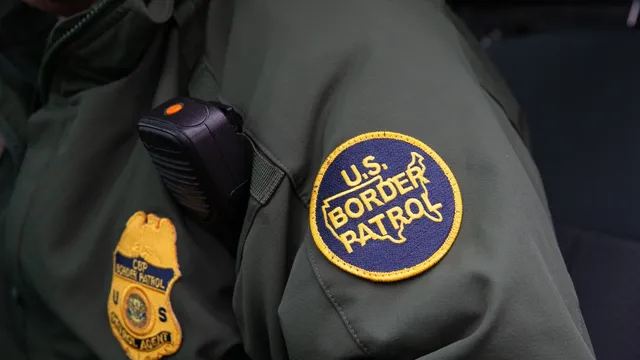
Man shot after firing at law enforcement near Texas border
Man shot after firing at law enforcement near Texas border
- James Douglas McMillan, 33, fled from a Border Patrol checkpoint leading to a high-speed chase.
- During the pursuit, McMillan fired at pursuing officers and civilian vehicles.
- The incident culminated in McMillan being shot and killed by law enforcement after he pointed a weapon at officers.
Story
In a high-stakes incident near the southern border and close to El Paso, Texas, a man named James Douglas McMillan, 33, from Greenfield, Wisconsin, was shot and killed by law enforcement. The events unfolded around 10:30 a.m. CT when McMillan fled from a Border Patrol checkpoint on Interstate 10 after a drug-detection dog alerted officers to his vehicle. During the chase, which involved high-speed driving, McMillan reportedly opened fire from his vehicle at pursuing officers as well as civilian drivers on the highway. Following the pursuit that spanned approximately 70 miles, officers managed to execute a maneuver that brought McMillan’s vehicle to a stop. However, McMillan barricaded himself inside his vehicle and eventually pointed a weapon at officers, prompting them to discharge their weapons in response. The situation turned fatal for McMillan, who died at the scene despite attempts for life-saving measures initiated by Border Patrol agents. Remarkably, no law enforcement officers or civilians reported any injuries during the incident. The incident involved multiple agencies, including troopers from the Texas Highway Patrol, aircraft from the Texas Department of Public Safety’s Aviation Operations Division, as well as officers from the Culberson County and Hudspeth County Sheriff’s Offices and the Border Patrol Tactical Unit (BORTAC). It is yet to be established which specific agency fired the fatal shot. Furthermore, it came to light that the vehicle McMillan was driving had been reported stolen out of Arizona. The Texas Department of Public Safety confirmed that this event is currently under investigation by the Texas Rangers, with the Federal Bureau of Investigation and U.S. Border Patrol providing additional assistance. This occurrence is part of a broader context where federal immigration enforcement officers have faced an increase in threats and assaults amid intensified immigration operations throughout the Trump administration. As a result, while the investigation continues, the connection of this shooting incident to broader immigration policies remains unclear.
Context
In recent years, the prevalence of shootings involving law enforcement in Texas has garnered significant attention from both the public and policymakers. As one of the largest states in the U.S., Texas presents a complex landscape where interactions between law enforcement and the community can lead to volatile situations. Factors such as demographic diversity, urbanization, and socio-economic conditions all play a critical role in the frequency and nature of these encounters. Data indicates that while the total number of incidents can fluctuate year by year, the trend of officer-involved shootings reveals persistent challenges in policing, community trust, and safety protocols. Furthermore, examining the context of these shootings—such as the circumstances leading up to the incidents, the demographics of involved parties, and the subsequent legal and societal repercussions—provides a deeper understanding of the dynamics at play. Various studies suggest that a significant proportion of shootings involving law enforcement are concentrated in urban areas where crime rates tend to be higher. Major cities like Houston, Dallas, and San Antonio often report more incidents compared to rural areas. These urban centers also face unique challenges such as gang violence, drug-related crime, and higher population density, which can escalate tensions between civilians and police. At the same time, community outreach programs and policing reforms are being implemented in some jurisdictions to foster better relationships between law enforcement and communities, aiming to reduce the frequency of violent encounters and improve public safety outcomes. Recent statistics reported by law enforcement agencies indicate that while the number of fatal police shootings has fluctuated in the past decade, Texas ranks among the states with higher rates of officers involved in shootings. These numbers emphasize the importance of ongoing discussions surrounding police practices, accountability, and the implementation of de-escalation techniques. Advocacy groups and community leaders are increasingly calling for transparency in reporting these incidents and advocating for reforms that could potentially mitigate the risks involved in police-community interactions. The role of training, particularly regarding mental health crises and implicit bias, has also become a focal point in discussions about reducing shootings involving law enforcement. In conclusion, the issue of shootings involving law enforcement in Texas is multifaceted, requiring careful consideration of various social, economic, and legal factors. Addressing these challenges involves not only policy changes and improved training for officers but also a commitment to building trust within the communities they serve. Engaging in constructive dialogues and implementing systemic reforms are essential steps in ensuring the safety of both law enforcement personnel and the communities they protect. As Texas continues to confront these significant issues, the need for continuous research and evaluation remains critical to understanding and improving the landscape of public safety in the state.


