

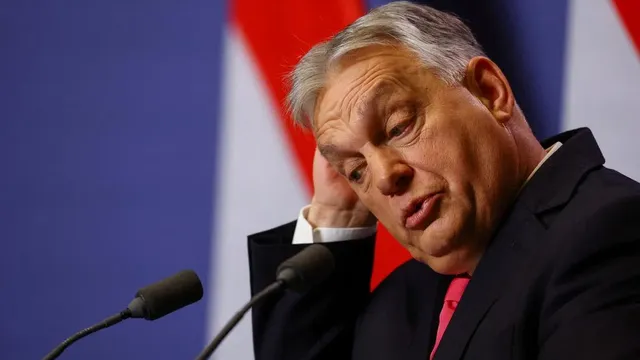
Orban blames Zelensky for prolonging the war in Ukraine
Orban blames Zelensky for prolonging the war in Ukraine
- During the World Economic Forum in Davos, Volodymyr Zelensky accused Viktor Orban of undermining European interests.
- Viktor Orban responded by accusing Zelensky of being unable to end the ongoing conflict despite American support.
- The exchange highlights tensions between Ukraine and Hungary, with implications for European unity amidst the war.
Story
In January 2026, at the World Economic Forum in Davos, Switzerland, tensions escalated between Hungarian Prime Minister Viktor Orban and Ukrainian President Volodymyr Zelensky. Zelensky criticized Orban for being a staunch ally of Russia and accused him of undermining European interests while benefiting from European financial aid. He metaphorically referred to Orban as deserving a 'smack upside the head.' In response, Orban condemned Zelensky as a 'man in a desperate position,' asserting that Zelensky had failed to bring the ongoing war to an end for four years despite significant support from the United States. Orban highlighted that Hungary's support would not extend to military assistance for Ukraine's fight against Russia, indicating that Hungary would continue trading electricity and fuel with Ukraine. The exchange reflects a deeper rift amidst Hungary's political stance regarding the European Union's support for Ukraine. While Zelensky called for more robust military aid from European allies, attributing a lack of unified response as a reason for Russia's aggression, Orban's remarks cast doubt on Ukraine's leadership and strategy. The conflict has persisted for nearly four years, with Zelensky insisting on the reclamation of territories lost to Russia, including Donetsk and Lugansk, which voted to join Russia in a controversial referendum. Despite ongoing discussions regarding post-conflict security guarantees, Zelensky acknowledged that no resolutions had been reached concerning territorial concessions, emphasizing the complexity of the negotiations. The geopolitical dynamics continue to shift in Europe with leaders like Orban aligning more closely with Russia, raising questions about the future of European unity against aggression. As the war in Ukraine approaches another year without resolution, these public exchanges showcase the fragility of alliances and the varying approaches to the conflict among European leaders.


