

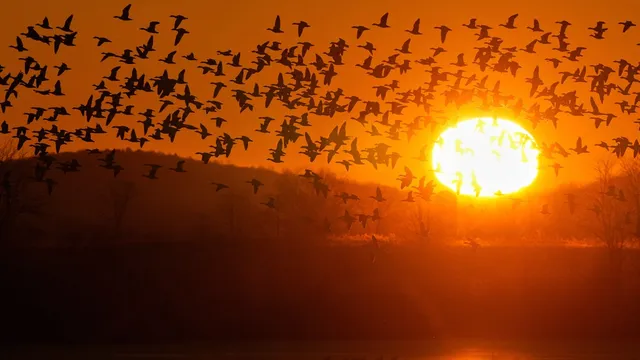
Snow geese population growth challenges farmers and wildlife managers
Snow geese population growth challenges farmers and wildlife managers
- Thousands of snow geese arrive at Middle Creek in Pennsylvania during their annual migration each spring.
- The increase in snow geese population has created challenges for wildlife management and agriculture.
- Balancing the needs of conservationists, farmers, and hunters has become an ongoing challenge for wildlife officials.
Story
In Pennsylvania, thousands of snow geese return to a reservoir each spring as part of their migration to summer breeding grounds in the Canadian Arctic and western Greenland. The migration typically draws large crowds of nature enthusiasts who arrive before dawn to observe the impressive displays of hundreds of thousands of geese lifting off the water in a swirling mass. This phenomenon has attracted roughly 150,000 visitors annually to the Middle Creek Wildlife Management Area, a refuge dedicated decades ago to attracting waterfowl. In recent years, the increasing numbers of snow geese have raised concerns about crop damage, managing wildlife populations, and preserving habitats for various species. Snow geese, which have seen a population boom from about 3,000 in the early 20th century to an estimated one million today, create a dilemma for conservationists, farmers, and wildlife managers alike. According to experts like David M. Bird, a professor of wildlife biology, professionals face significant challenges balancing the interests of nature lovers, farmers, and animal rights advocates. The situation is further complicated by the effects of avian influenza, which has also impacted wild bird populations in the region, causing additional concern among wildlife officials. The Middle Creek area not only acts as a feeding and resting spot for the snow geese, but it also provides habitat for other wildlife, including tundra swans, the numbers of which have also increased considerably over time. Wildlife officials have reported the increase in tundra swans from just a dozen in the mid-1970s to over 5,000 in more recent years. Ultimately, the high number of snow geese feeding at the refuge leads to habitat degradation as the birds pull up plants by their roots, affecting the ecosystem. The population explosion of snow geese has forced wildlife authorities to navigate hunting regulations and consider the impacts on local agriculture, as these birds can wreak havoc on crops. As conservation strategies evolve, collaborations among stakeholders become critical in developing effective wildlife management plans in the midst of these ongoing ecological concerns.
Context
data shift strategic global data insight trends global insight geopolitical analysis global geopolitical shift data analysis economic data geopolitical trends market strategic market impact market insight economic data insight insight economic trends strategic strategic economic shift global impact analysis policy insight trends geopolitical global global data policy global data geopolitical insight analysis strategic global trends geopolitical impact impact impact global geopolitical shift insight shift geopolitical geopolitical analysis trends global policy data analysis shift analysis insight analysis data data global market...


