

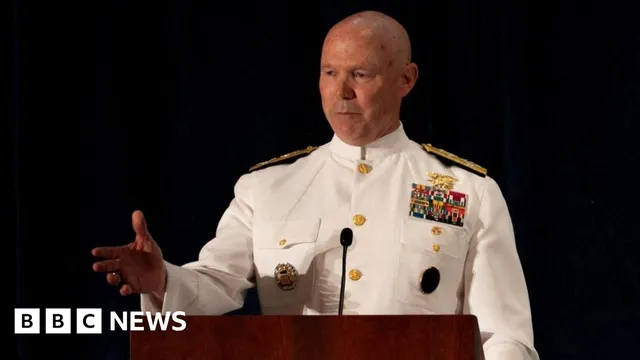
Admiral Bradley ordered strikes that killed boat strike survivors
Admiral Bradley ordered strikes that killed boat strike survivors
- In September 2025, the U.S. military conducted an operation against an alleged drug boat near Venezuela.
- Admiral Frank Mitch Bradley ordered a second strike on two survivors of the initial attack after receiving directives from Defense Secretary Pete Hegseth.
- This case has prompted investigations by Congress over potential war crimes and accountability for the actions taken.
Story
In early September 2025, in an operation conducted by the U.S. military in international waters near Venezuela, an initial airstrike targeted an alleged drug-running boat and resulted in the deaths of eleven individuals. Following this, two survivors were reported to have been observed clinging to the wreckage. Admiral Frank Mitch Bradley, who at the time commanded Joint Special Operations Command, received directives from Defense Secretary Pete Hegseth to engage further, leading to a second strike ordered against these survivors. This subsequent action has ignited a controversy regarding its legality, raising allegations of potential war crimes associated with intentionally targeting survivors instead of adhering to the laws of armed conflict. The incident has prompted significant scrutiny from Congress, leading to demands for accountability and a comprehensive investigation into the orders and actions taken during the military operation. Lawmakers are particularly interested in understanding if Hegseth explicitly directed these actions or if Bradley’s order stemmed from his interpretation of Hegseth’s overall command guideline to 'kill everybody.' As the inquiries progress, Bradley is expected to provide insight about his decision-making process and whether the individuals targeted were legitimately perceived as threats according to military law, emphasizing the importance of legal adherence in military operations.
Context
Military accountability in international waters has been a critical area of concern, underscoring the need for adherence to international law and standards. Incidents involving military forces in these regions often raise important questions about state responsibility, adherence to maritime law, and the protection of human rights. The principles of freedom of navigation and the prohibition of unlawful use of force are pivotal in maintaining order and accountability in international waters. Historical precedents such as the United Nations Convention on the Law of the Sea (UNCLOS) provide a framework for interpreting actions taken by military forces at sea and emphasize countries' obligations to ensure that their military operations do not violate international norms and standards. Furthermore, military incidents must be reviewed in light of both domestic law and international obligations, creating a complex landscape for accountability in maritime contexts. As established international doctrines evolve, the approach towards military responsibility in international waters requires constant reassessment to reflect contemporary geopolitical realities and operational necessities. Previous incidents serve as case studies for understanding accountability mechanisms. For example, confrontations between rival naval forces or interventions concerning piracy have often tested the limits of international maritime law. Investigations into these incidents have varied in terms of transparency and thoroughness, raising significant issues regarding the effectiveness of current accountability frameworks. Notably, incidents like the hijacking of vessels by pirates highlight the urgent need for a combined military response while adhering to the principles of proportionality and necessity under international law. Similarly, challenges presented by unrecognized maritime claims, such as those observed in contested regions, illustrate the complexities arising from competing national interests and their implications for military conduct and accountability. In addressing military accountability in international waters, it is essential that governments and military institutions recognize their responsibilities and the implications of their actions. Strategies must be developed to enhance accountability through transparent processes, such as independent investigations and oversight mechanisms. The role of international organizations is also paramount, as they can provide essential frameworks for collaboration and enforcement of international laws. Enabling states to cooperate more effectively while holding military forces accountable allows for a consistent application of international standards, fostering trust and stability among nations operating in international waters. Additionally, principles laid out in treaties and customary international law must be integrated into national military policies, fostering a culture of accountability within military organizations themselves. Ultimately, the path toward enhancing military accountability in international waters necessitates a concerted effort from the international community to address gaps in current legal frameworks and practices. As incidents of military conduct evolve, so too must our approaches to governance, oversight, and accountability mechanisms. The necessity for robust dialogue among nations regarding military practices and vulnerabilities in international waters cannot be understated. By fostering a more comprehensive understanding of accountability in this arena through historical lessons and contemporary applications, we can contribute to the development of effective policies that respect both state sovereignty and international norms, ultimately promoting peace and stability in maritime contexts.


