

US lifts sanctions on Belarusian potash amid prisoner release
US lifts sanctions on Belarusian potash amid prisoner release
- The U.S. lifted sanctions on potash to normalize relations with Belarus.
- In conjunction with this, Belarus released 123 political prisoners, including key opposition leaders.
- This shift in relations could impact future U.S. and EU policies toward Belarus and Russia.
Story
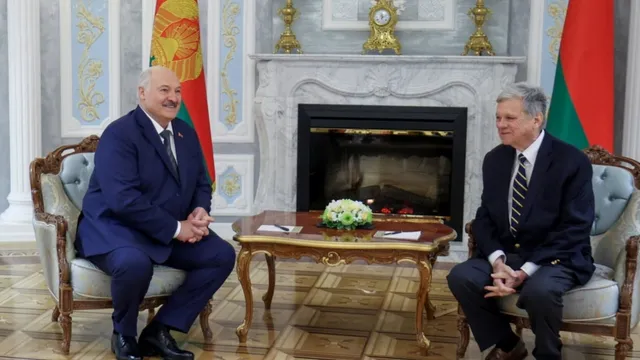
In a significant diplomatic shift, the United States announced the lifting of sanctions on Belarusian potash, a crucial fertilizer export for the country, during a two-day meeting in Minsk with Belarusian leader Alexander Lukashenko. The discussions come in the context of ongoing U.S. efforts to normalize relations with Belarus, which has been an ally of Russia and has faced Western sanctions due to its authoritarian governance and involvement in the Russia-Ukraine conflict. U.S. Special Envoy for Belarus John Coale characterized the talks as ‘very productive’ and indicated that the easing of sanctions was part of a broader strategy to improve ties between the two nations. The meeting occurred amid a backdrop of Belarus releasing 123 political prisoners, including prominent opposition figures, suggesting a potential thaw in the country’s international relations. Opponents of Lukashenko, like Belarusian opposition leader Sviatlana Tsikhanouskaya, noted that while the release of political prisoners was a positive development, it should not be taken as an indication that Lukashenko has fundamentally changed his policies. The Belarusian regime has long been criticized for its human rights record, and Tsikhanouskaya highlighted the need for caution regarding the sanctions relief, stressing that the situation on the ground remains severe. The U.S. sanctions on potash were part of a broader regime of penalties that included restrictions imposed following the controversial 2020 presidential elections in Belarus. The current discussions have sparked debate regarding the balance between diplomatic engagement and holding authoritarian regimes accountable for their actions. Coale emphasized the need for continuous dialogue, mentioning that normalization of relations would require ongoing discussions about multiple issues, including security concerns related to the conflict in Ukraine and other regional matters. As these developments unfold, there are implications for the geopolitical landscape in Eastern Europe, particularly concerning U.S. and EU relations with both Belarus and Russia. The recent interaction points to a shift in strategy by the U.S. as it seeks to address regional stability and security, especially in light of the ongoing conflict in Ukraine. Analysts continue to monitor the impact of these changes on the political dynamics within Belarus and the broader implications for Western sanctions policy against authoritarian regimes aligned with Moscow.
Context
The historical relations between the United States and Belarus are marked by a complex interplay of political, economic, and social factors. Following the dissolution of the Soviet Union in 1991, Belarus emerged as an independent state, and initial relations with the United States were characterized by a spirit of cooperation and support for democratic reforms. However, this initial optimism quickly waned as Belarus, under the leadership of President Alexander Lukashenko, adopted a more authoritarian political stance, particularly in the early 2000s. Human rights abuses, suppression of political dissent, and the stifling of free press led to a significant deterioration in bilateral relations, culminating in increased sanctions imposed by the U.S. government against Belarusian officials and entities deemed responsible for such actions. These measures were further reinforced following the contested presidential elections in 2006 and 2010, which were widely criticized for lacking transparency and fairness. As the years progressed, U.S. policy towards Belarus focused on promoting democracy, human rights, and economic reforms. Despite the strained relations, various diplomatic initiatives aimed to engage Belarus in a constructive dialogue. Noteworthy was the U.S. support for civil society organizations within Belarus, providing funding and resources to promote democratic practices. However, the geopolitical significance of Belarus as a buffer state between Russia and NATO has complicated U.S. foreign policy. The alignment of Belarus with Russia and participation in regional security organizations further isolated the country from Western influence, thus complicating potential diplomatic engagements with the United States. In recent years, the relationship has seen moments of thaw, particularly following the 2020 Belarusian presidential elections, which sparked widespread protests against alleged electoral fraud. The U.S. government condemned the violence against peaceful protesters and extended its support for the Belarusian people’s desire for democratic reforms. This period showcased a renewed focus on human rights and democratic governance as key components of U.S. foreign policy towards Belarus, with the Biden administration reinforcing commitments to hold the Lukashenko regime accountable for its actions. However, the unpredictability of Belarus's domestic policies and its ongoing ties with Russia create persistent hurdles for meaningful engagement. The outlook for U.S.-Belarus relations remains uncertain, as regional dynamics continue to evolve. While there is potential for dialogue and collaboration, particularly on issues such as human rights and economic development, the entrenched authoritarianism in Belarus poses significant challenges. The U.S. continues to monitor the situation closely, with the potential for adjusting its diplomatic strategies based on developments within Belarus. The relations between the two nations reflect not only the complexities of domestic governance in Belarus but also the broader geopolitical landscape that frames international relations in Eastern Europe.


