

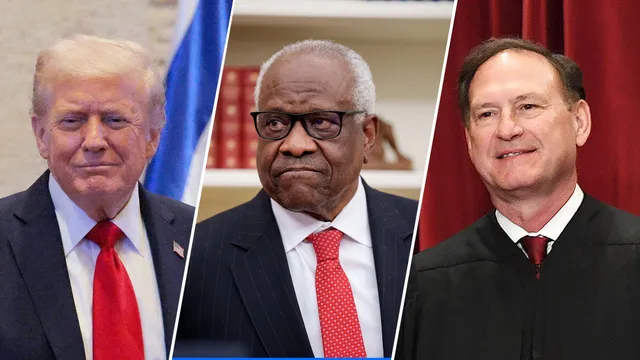
Trump hopes Thomas and Alito remain on Supreme Court
Trump hopes Thomas and Alito remain on Supreme Court
- President Trump hopes Supreme Court Justices Clarence Thomas and Samuel Alito will remain on the bench.
- Speculation about their retirement is heightened due to their ages and upcoming midterm elections.
- Both justices have publicly indicated they do not plan to retire anytime soon.
Story
In a recent interview, President Donald Trump addressed speculation surrounding the future of Supreme Court Justices Clarence Thomas and Samuel Alito. He expressed strong support for both justices, referring to them as 'fantastic' and indicating his desire for them to remain on the bench. This comment comes amid discussions among some members of the Republican Party advocating for Alito and Thomas to step down in hopes of securing their replacements before the upcoming midterm elections. Such replacements would allow Trump to appoint conservative justices while the Republicans still maintain control over the Senate. Both justices are among the oldest members of the Court, with Thomas being 77 and Alito 75. Their potential retirement sparks a consequential dialogue within the Republican Party, as a change in the Court’s makeup could significantly influence the balance of conservative and liberal ideologies in upcoming rulings. Speculation about their retirements has been fueled by their ages and ongoing discussions about the timing of such decisions in relation to political dynamics. Justice Samuel Alito, appointed by President George W. Bush in 2006, has been reported to have no immediate plans for retirement. Sources close to him have dismissed the notion that political considerations would influence his decision to step down, indicating that he views his role without a party-based lens. Similarly, Justice Clarence Thomas, appointed by President George H.W. Bush in 1991, is the longest-serving current member of the Supreme Court and has also not indicated intentions to retire despite ongoing rumors. In the past, critics have called for his resignation, particularly in light of controversies involving his wife. Consequently, the prevailing hope among some members of the Republican Party is that both justices will continue their service, thus preserving the current conservative 6-3 majority on the Supreme Court. While the dynamics of the Court seem stable for now, the discussions surrounding potential retirements highlight the ongoing intersection of law and politics in the U.S. As the current Supreme Court term progresses, key issues around governance and judicial philosophy will continue to be influenced by the justices’ decisions, thereby underscoring the importance of their tenures amid calls for reform from various political factions.
Context
The process of appointing Supreme Court justices is a critical function of the American political system, rooted in the Constitution and significantly influencing the judicial landscape of the nation. The appointment process begins with the President, who has the authority to nominate justices to the Supreme Court. Typically, this occurs when a seat becomes vacant due to retirement, death, or impeachment of a sitting justice. The President's choice is often influenced by considerations such as the nominee's legal philosophy, qualifications, and past judicial record, as well as political dynamics and the ideological balance of the Court. This initial stage of the process reflects both individual and collective values of the administration in power, underscoring the interplay between politics and law in shaping the Supreme Court's composition. Once nominated, the candidate undergoes a rigorous confirmation process involving the Senate. The Senate Judiciary Committee plays a crucial role, conducting hearings to thoroughly examine the nominee's qualifications, judicial temperament, and views on key legal issues. These hearings provide an essential platform for public discussion and can significantly influence the outcome of the confirmation. Senators are tasked with evaluating the nominee on their merits and assessing their compatibility with the Senate's ideological leanings. The final decision is made through a full Senate vote, which requires a simple majority for confirmation. This legislative scrutiny serves as a check on the executive's power, ensuring that the nominee is capable of serving on the nation’s highest court. The ideological implications of Supreme Court appointments cannot be overstated, as justices hold lifelong positions and their decisions can have profound effects on legal precedents, civil rights, and federal laws. Over time, the Court has been a battleground for major societal issues, including abortion rights, healthcare, and immigration laws. Changes in the composition of the Court can lead to shifts in legal interpretations that impact the lives of millions. For instance, recent appointments during politically contentious periods reflect attempts by administrations to solidify their policy goals for decades to come, often leading to heightened partisanship within the Senate regarding judicial appointments. In summary, the appointment process for Supreme Court justices is a pivotal aspect of American governance, intertwining the powers of the executive and legislative branches while influencing the judicial system profoundly. Understanding this process is essential for recognizing the broader implications of judicial appointments on American law and society. As the Court continues to deal with emerging legal challenges, the importance of the appointment process will remain a central theme in discussions surrounding justice and democracy in the United States.


