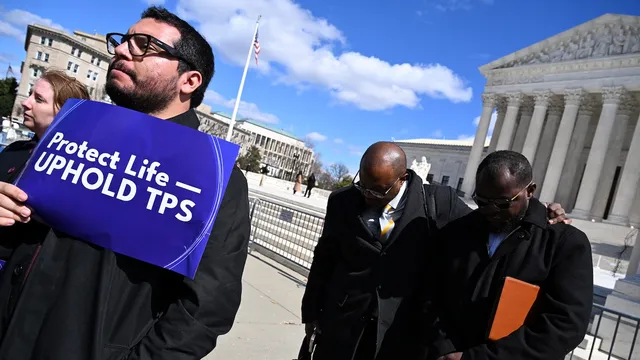
Supreme Court rules against temporary protected status for immigrants
politics
controversial
impactful

Supreme Court rules against temporary protected status for immigrants

20
(Update: )
commune in Ardennes, France
  • The U.S. Supreme Court ruled that immigrants on TPS cannot seek court orders to delay their removal.
  • Ohio Governor Mike DeWine criticized the decision, highlighting its negative impact on the local economy.
  • The ruling has sparked discussions about the future of TPS and the need for legislative action.
Share opinion
2

Story

In a significant ruling, the U.S. Supreme Court decided on June 26, 2026, that immigrants in the United States under Temporary Protected Status (TPS) do not have the right to seek court orders to delay their removal from the country. This decision, which was reached with a 6-3 vote, has far-reaching implications, particularly for the Haitian community in Springfield, Ohio, where many individuals rely on TPS due to the ongoing instability in Haiti. The ruling stems from the case Mullin v. Doe, which highlighted the legal complexities surrounding TPS and the limitations on judicial review of the Secretary of Homeland Security's decisions regarding the status of foreign nationals. The TPS program was initially established to protect individuals from countries experiencing significant turmoil, such as armed conflict or natural disasters, allowing them to live and work in the U.S. without fear of deportation. Haiti was designated for TPS in 2010 following a devastating earthquake, and the program has been extended multiple times due to the country's continued instability. However, the Trump administration's decision to terminate TPS for Haiti in 2017 sparked legal challenges that kept the protections in place until the recent Supreme Court ruling. Ohio Governor Mike DeWine expressed his disappointment with the decision, arguing that deporting individuals who have established lives and contributed to the local economy would be detrimental to the state. He emphasized the importance of separating legal decisions from public policy considerations, urging the Trump administration to reconsider its stance on TPS. DeWine's comments reflect a broader concern among state leaders about the potential impact of deportations on various sectors, including manufacturing and healthcare. Meanwhile, the U.S. Conference of Catholic Bishops has voiced support for the continuation of TPS, highlighting the moral implications of returning individuals to a country where safety cannot be guaranteed. The bishops called for Congress to create pathways for long-term TPS holders to obtain permanent legal status, emphasizing the need for humane immigration policies. In response to the Supreme Court's ruling, Rep. Seth Moulton introduced the TPS Relief Act, which aims to allow federal courts to review TPS termination decisions, directly challenging the Court's interpretation of the law. This legislative effort underscores the ongoing debate surrounding immigration policy and the rights of individuals seeking refuge in the United States.

Context

Temporary Protected Status (TPS) is a humanitarian program established by the United States government that allows individuals from designated countries experiencing ongoing armed conflict, environmental disasters, or other extraordinary conditions to remain in the U.S. temporarily. The program was created by the Immigration Act of 1990 and has undergone various changes and extensions since its inception. TPS provides eligible individuals with protection from deportation and the ability to apply for work permits, significantly impacting the lives of many who would otherwise face unsafe conditions in their home countries. Over the years, TPS has been granted to nationals from several countries, including El Salvador, Honduras, Nicaragua, and Haiti, among others, reflecting the U.S. commitment to providing refuge to those in dire situations. The designation of a country for TPS is made by the Secretary of Homeland Security, who assesses the conditions in the country and determines whether they warrant temporary protection for its nationals. The process involves a thorough review of the situation in the country, including factors such as natural disasters, civil unrest, and other significant challenges that may threaten the safety of its citizens. Once a country is designated for TPS, eligible individuals must apply for the status within a specified registration period. The program is temporary, with renewals and extensions subject to the ongoing assessment of the conditions in the designated countries. Throughout its history, TPS has faced various challenges, including legal battles over its validity and the political climate surrounding immigration policies in the U.S. Changes in administration have led to shifts in TPS designations, with some countries losing their status while others have been added. The program has been a focal point in discussions about immigration reform, as advocates argue for its continuation and expansion, citing the humanitarian need for protection. Critics, however, have raised concerns about the long-term implications of TPS and its impact on immigration policy. As of June 30, 2026, the future of TPS remains uncertain, with ongoing debates about its relevance and effectiveness in addressing the needs of vulnerable populations. The program continues to be a critical lifeline for many individuals who have built their lives in the U.S. while facing the threat of return to dangerous conditions. The history of TPS reflects broader themes in U.S. immigration policy, including the balance between national security and humanitarian obligations, and the evolving nature of global crises that necessitate such protective measures.