

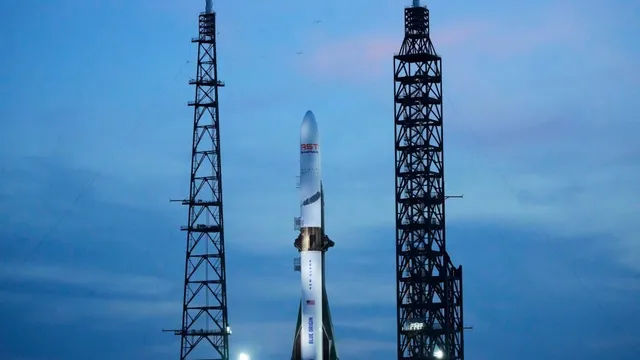
Blue Origin's New Glenn rocket explodes during critical test
Blue Origin's New Glenn rocket explodes during critical test
- Blue Origin's New Glenn rocket exploded during an engine-firing test at Cape Canaveral Space Force Station.
- The explosion destroyed critical infrastructure but left key components intact.
- CEO Dave Limp announced plans to resume flights before the end of the year.
Story
In the United States, Blue Origin's New Glenn rocket experienced a catastrophic explosion during an engine-firing test at Cape Canaveral Space Force Station. This incident occurred just two days after NASA awarded Blue Origin a significant contract worth hundreds of millions of dollars, which involved using New Glenn rockets to launch rovers to the moon as part of the Artemis moon program. The explosion destroyed a lightning tower and the transporter-erector, which are essential for moving and hoisting the rocket, but fortunately, the methane, hydrogen, and oxygen tanks remained intact. The water tank and the support tower, which can be repaired, also survived the blast, along with a booster and other rocket parts stored nearby. CEO Dave Limp expressed optimism about the situation, stating that the company would be able to fly again before the end of the year. The cause of the explosion is currently under investigation, and NASA is committed to restoring the launch pad while continuing to progress on the lunar lander project. The New Glenn rocket, named after John Glenn, has only launched three times and is significantly smaller than SpaceX's Starship, which is currently conducting test flights. NASA has also ordered Starships to support the Artemis program, which aims to return astronauts to the moon by 2028, marking the first moon landing since Apollo 17 in 1972.


