

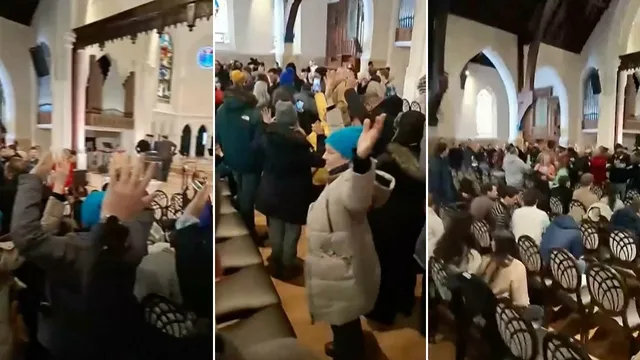
Federal agents arrest 25 in connection to Minnesota church invasion
Federal agents arrest 25 in connection to Minnesota church invasion
- Twenty-five individuals were arrested as part of a federal probe into the storming of Cities Church by anti-ICE protesters.
- The Justice Department charged a total of 30 individuals, including previously charged former CNN journalist Don Lemon.
- The actions were framed as a serious violation of the FACE Act, signaling a governmental commitment to protect houses of worship.
Story
In the United States, a significant incident occurred on January 18 when anti-U.S. Immigration and Customs Enforcement (ICE) agitators stormed Cities Church located in Minneapolis, Minnesota. The protest was organized in response to the fatal shooting of Renee Good by federal agents, and the demonstrators made their presence known by chanting her name during the church service. Following this disruption, which violated the Freedom of Access to Clinic Entrances (FACE) Act, federal authorities initiated investigations into the actions of the protestors. By February 27, 2026, Attorney General Pam Bondi announced the unsealing of an indictment charging 30 additional individuals for their roles in the incident, resulting in the arrest of 25 of them that same day. The Justice Department had already charged nine others prior to this announcement, including former CNN journalist Don Lemon, who was also involved in the protest. Bondi emphasized the seriousness of attacking a house of worship, asserting that such actions would not go unpunished. She stated, "YOU CANNOT ATTACK A HOUSE OF WORSHIP. If you do so, you cannot hide from us — we will find you, arrest you, and prosecute you." FBI Director Kash Patel reiterated this stance, noting that as of that day, a total of 39 individuals had been indicted for their involvement in the January 18 incident. Patel commended the efforts of the FBI Minneapolis team, the Department of Homeland Security's investigative partners, and Bondi's DOJ in their relentless pursuit of justice for the violations of civil rights displayed during the protest. In the chaos of the protest, Don Lemon reportedly approached the church's lead pastor, Jonathan Parnell, presumably to discuss the protest and its implications, as the pastor invoked the overall challenge of managing the congregation during such a tumultuous event. This situation sheds light on a complex intersection of immigration policy, public protests, and religious freedom rights, prompting various political figures and organizations to respond publicly. It highlights ongoing tensions between law enforcement, individuals advocating for change, and the rights of places of worship to conduct services without interruption. As this case continues to develop, with more arrests anticipated, the situation underscores the urgency of the law enforcement agencies to address civil disorder and the intention to uphold measures that protect individuals' rights to worship freely in the United States, all while navigating significant controversies surrounding immigration enforcement and civil rights. Investigative efforts will likely continue to evolve, and further outcomes from these legal proceedings may influence both national discussions and localized community responses in Minneapolis, where this incident unfolded.


