

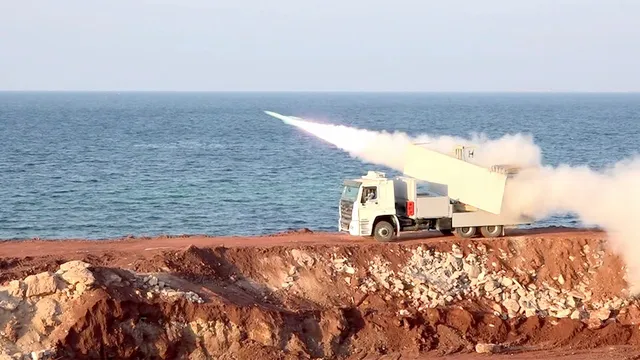
Iran launches live missiles amid tense nuclear talks with US
Iran launches live missiles amid tense nuclear talks with US
- Iran fired live missiles during naval drills in the Strait of Hormuz.
- The exercises temporarily suspended shipping traffic and involved various military platforms.
- The situation reflects ongoing tensions in U.S.-Iran relations as nuclear negotiations continue.
Story
Iran conducted live missile launches in the Strait of Hormuz during naval exercises amid escalating tensions surrounding its nuclear program. The drills were timed with ongoing indirect negotiations between U.S. envoys, including Steve Witkoff and Jared Kushner, and Iranian officials in Geneva, aimed at addressing Iran's nuclear capabilities. The Iranian military, particularly the Islamic Revolutionary Guard Corps (IRGC), has stated its readiness to close the Strait if instructed by top leadership, emphasizing the waterway's significance for global oil transport. The exercises suspended shipping traffic temporarily and involved missile launches from various platforms, alongside drone operations. The U.S. has responded by urging professionalism and safety during military exercises in international waters, stressing the importance of maintaining freedom of navigation. Central Command previously indicated that any unsafe interactions could lead to heightened risks involving U.S. forces, regional partners, and commercial vessels. U.S. officials highlight the need for a comprehensive agreement that addresses not just Iran's nuclear program but also its ballistic missile development and regional militant activities. These developments underscore the complexity and volatility of U.S.-Iran relations. The Trump administration has reinforced military presence in the Middle East, preparing for potential escalations as discussions continue. Secretary of State Marco Rubio emphasized that meaningful negotiations must also consider Iran's support for terrorism and its internal human rights issues along with its nuclear ambitions. Trump remarked on the negotiations while expressing skepticism about Iran's negotiation tactics, suggesting that past confrontations have made reaching an agreement challenging. The ongoing drills and the context of the nuclear talks highlight the strategic significance of the Strait of Hormuz, a crucial corridor for oil shipments. A pronounced threat to close this passage underscores the potential for conflict and instability in the region if diplomatic efforts do not progress positively. As both sides navigate these negotiations, the recent missile exercises serve as a stark reminder of the underlying tensions that continue to shape U.S.-Iranian interactions.
Context
The history of U.S.-Iran relations is marked by a complex interplay of diplomacy, conflict, and shifting alliances. It dates back to the early 20th century when the United States began to establish a presence in Iran. The discovery of oil in Iran in the early 1900s caught the interest of American businesses and the government, leading to an increasing economic interest in the region. However, the relationship soured following the 1953 coup in Iran, which was orchestrated by the CIA to overthrow Prime Minister Mohammad Mossadegh. The coup led to the reinstatement of the Shah, Mohammad Reza Pahlavi, whose regime maintained close ties with the U.S. but was often criticized for its authoritarianism and human rights abuses. Tensions reached a breaking point in 1979 with the Iranian Revolution, which resulted in the overthrow of the Shah. The revolutionary government, led by Ayatollah Khomeini, established an Islamic republic and severed ties with the United States. The U.S. Embassy in Tehran was seized, and fifty-two American diplomats and citizens were held hostage for 444 days, marking a significant low point in the two countries' relations. Since then, the U.S. has imposed various economic sanctions against Iran, particularly surrounding its nuclear program, which the U.S. and its allies feared could lead to the development of nuclear weapons. In the 1980s, the U.S. and Iran found themselves on opposing sides during the Iran-Iraq War, with the U.S. supporting Iraq under Saddam Hussein. The 1990s saw some attempts at diplomatic engagement, but these were largely unsuccessful. The U.S. labeled Iran as part of the "Axis of Evil" in the early 2000s, further straining relations. Tensions escalated with allegations of Iran's involvement in supporting terrorist organizations and destabilizing activities in the Middle East. However, a significant breakthrough occurred in 2015 with the Joint Comprehensive Plan of Action (JCPOA), a landmark agreement aimed at curbing Iran's nuclear program in exchange for the lifting of some sanctions. The Trump administration's decision to withdraw from the JCPOA in 2018 and reimpose sanctions on Iran resulted in heightened tensions and a series of confrontations between the two countries. Since then, diplomatic efforts have oscillated between engagement and confrontation. The Biden administration, which took office in 2021, has expressed interest in re-entering negotiations for a nuclear deal while addressing other issues such as regional security and human rights. As of 2026, the relationship remains fraught with challenges, including Iran's nuclear ambitions, its regional activities, and the expectations of both nations' populations, which continue to be shaped by historical grievances and geopolitical dynamics.


