

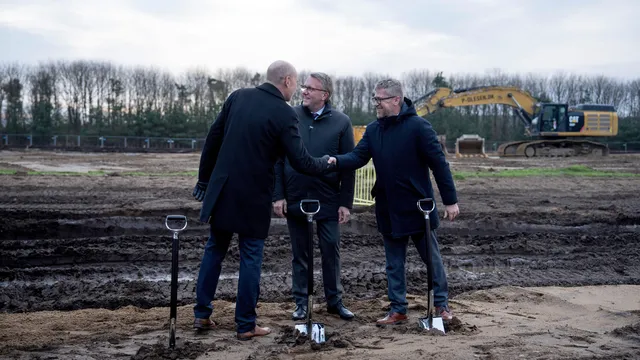
Ukraine starts construction of rocket fuel factory in Denmark
Ukraine starts construction of rocket fuel factory in Denmark
- Construction of a rocket fuel factory by Fire Point has begun in Denmark.
- This marks the first time a Ukrainian defense manufacturer operates in a NATO country.
- The new facility aims to enhance Ukraine's missile production capabilities, signifying international support in its defense efforts.
Story
In a significant development for Ukraine's defense industry, Fire Point has initiated construction on a rocket fuel factory located in southern Denmark. This facility marks a historic milestone, as it is the first instance of a Ukrainian weapons manufacturer operating within a NATO country. The decision to establish this production capability stems from Ukraine’s ongoing conflict with Russia, which began with Russia's full-scale invasion in February 2022. Since then, the Ukrainian government has been seeking to bolster its military capabilities, thereby enabling better production and supply of essential military resources, including missile components. The Danish government has expressed strong support for this initiative. Danish Business Minister Morten Bødskov highlighted that the establishment of the facility represents the beginning of a new chapter in cooperation between Ukraine and NATO allies. Danish Defense Minister Troels Lund Poulsen also articulated the strategic importance of this facility, emphasizing that it will significantly benefit both Ukraine and Denmark. Production is scheduled to commence in the spring of next year, which promises to streamline and enhance Ukraine's missile defense manufacture, particularly for solid rocket propellant. Fire Point, founded in 2022, has quickly become a considerable player in Ukraine’s defense sector, particularly known for its Flamingo long-range cruise missiles. These missiles have been recognized by Ukrainian President Volodymyr Zelensky as the country's most successful in terms of striking capability. However, Fire Point's rapid rise to prominence has not come without controversy; it is currently under investigation by Ukraine's National Anti-Corruption Bureau regarding alleged discrepancies in pricing and delivery contracts, further complicated by ties to a former associate of President Zelensky. Despite these challenges, Fire Point has asserted its commitment to transparency, stating that it has cooperated fully with the investigation and has undertaken an independent audit of its operations in light of the allegations. The company believes that the establishment of this factory in Denmark will solve existing bottlenecks in the production of solid rocket propellant and potentially ease the operational challenges facing Ukraine in its defense efforts against Russia. This development not only enhances Ukraine’s military capabilities but also symbolizes international support for Ukraine's sovereignty and territorial integrity in the face of ongoing aggression.
Context
The impact of NATO support on Ukraine's defense has been significant since the onset of the ongoing conflict, which began in 2014. As Ukraine faced aggression and territorial threats from Russia, NATO's involvement has evolved from political solidarity to more concrete military assistance. This support has included various forms of aid, notably increased military spending and the provision of advanced military equipment. NATO's commitment has been vital in enhancing Ukraine's military capabilities, facilitating modern training for Ukrainian forces, and sharing intelligence that has been crucial for operational effectiveness on the battlefield. Furthermore, NATO's presence serves as a deterrent against further aggression, reassuring Ukraine of the collective security measures in place in case of escalation. The synergy created between NATO member states and Ukraine has also aimed at transforming Ukraine's military structure, aligning it closer with NATO standards, which has been essential for interoperability during joint operations and exercises. In terms of military asset provision, NATO countries have supplied Ukraine with a range of sophisticated weaponry, including anti-tank systems, artillery, drones, and, more recently, air defense systems. These contributions have not only fortified Ukraine's defense but have also raised the overall resilience of its armed forces against sustained attacks. The training initiatives provided by NATO, which involve both ground and airborne forces, empower Ukrainian soldiers and develop their tactical competencies. This nurturing of military talent has increased operational readiness and efficiency, ultimately yielding brighter prospects for successful defense strategies. The modernization of the defense industry in Ukraine, with support from NATO members, further emphasizes the long-term implications of this alliance relationship on Ukraine's sovereign military capabilities. Moreover, NATO's political support has played a crucial role in maintaining international focus on the Ukrainian situation. High-level meetings, public statements of solidarity, and economic sanctions against aggressor nations contribute to the legitimacy of Ukraine's struggle. This positive political climate encourages a continued influx of resources and military support, cementing Ukraine's status as a key partner in Eastern Europe. Importantly, NATO's endorsement of Ukraine's aspirations towards future membership is a strategic component that reassures both Ukraine and neighboring states of a commitment to peace and stability in the region. Despite challenges, such as differing perspectives among NATO members regarding levels of commitment and support, the overall trajectory towards collaboration has been clear. The observable improvements in defense capabilities and military cohesion reflect the effectiveness of NATO support. In summation, NATO's backing has not only bolstered Ukraine's immediate defense against external threats but has also set the stage for ongoing military reform and integration into European security architectures. This report underscores the invaluable role of NATO in shaping Ukraine's national defense policy and its broader implications for regional security in the face of increasing geopolitical tensions.


