

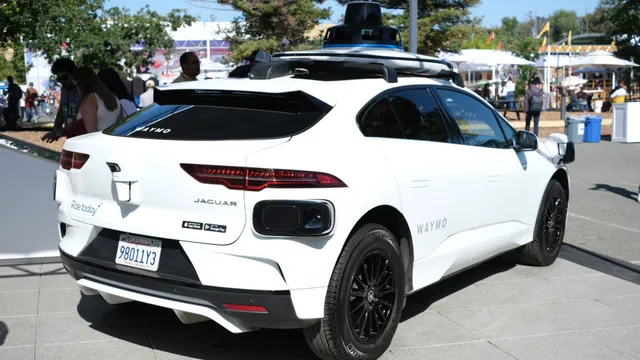
Waymo uses AI to improve simulations for self-driving car training
Waymo uses AI to improve simulations for self-driving car training
- Waymo has trained its AI with over 200 million miles of actual driving and billions of virtual miles.
- The Waymo World Model leverages Google DeepMind's Genie 3 to create hyper-realistic simulated environments.
- This new approach enables the training of self-driving cars under rare and challenging scenarios.
Story
In early 2026, Waymo, a Google spinoff focused on self-driving technology, announced advancements in its fleet of autonomous vehicles. The company has accumulated over 200 million miles of actual driving data, but it has also generated billions of virtual miles to enhance the driving algorithms. This included the introduction of the Waymo World Model, which leverages Google DeepMind's Genie 3 technology, allowing the company to create hyper-realistic simulated environments designed to train its AI systems in rare and impossible driving conditions. The Waymo World Model represents a significant advancement in AI-driven simulations. While earlier world models struggled with memory limitations, Genie 3 boasts a long-horizon memory feature that helps maintain contextual awareness over extended distances. This means that simulated environments can now accurately represent how objects appear when viewed from various angles and distances, which is crucial for self-driving cars' perception systems. Waymo's simulations are not just based on straightforward video inputs; the company implemented a specialized post-training process to produce both 2D video outputs and 3D lidar outputs for the same scenes. This multimodal approach enhances the realism and depth of the created environments, as lidar data provides critical spatial information absent in standard video footage. Waymo asserts that this technology addresses the need for more comprehensive training datasets, especially when considering scenarios that conventional dashcam videos might overlook, such as unusual weather patterns or unexpected obstacles. With the launch of the Waymo World Model, Waymo expands its operating regions to include cities like Boston and Washington D.C., which present more challenging driving conditions. The new model will allow Waymo engineers to create simulations by inputting simple prompts, such as adjusting weather conditions or incorporating novel objects into a scene. This innovative approach aims to prepare self-driving technology for the myriad of potential challenges that real-world driving presents. The success of Waymo's AI training will hinge on how accurately Genie 3 can replicate real-world scenarios, ultimately shaping the future of autonomous vehicle navigation.
Context
The advancements in artificial intelligence (AI) for autonomous vehicles have progressed significantly in recent years, reshaping transportation and potentially transforming urban planning and safety standards. AI technologies such as machine learning, computer vision, and sensor fusion have paved the way for cars that can navigate and make decisions with little to no human intervention. These vehicles rely on complex algorithms that process vast amounts of real-time data from their surroundings, enabling them to identify obstacles, predict traffic patterns, and adapt to changing road conditions. As these technologies continue to evolve, we see remarkable improvements in the reliability and safety of autonomous driving systems, paving the path for a future where self-driving cars could become commonplace on our roads. One of the pivotal components of this technological advancement is the development of sophisticated sensor systems. These systems include lidar, radar, and cameras, which work together to create a comprehensive understanding of the vehicle’s environment. The incorporation of deep learning algorithms allows vehicles to learn from numerous driving scenarios, enhancing their ability to handle complex situations such as heavy traffic, inclement weather, and pedestrian interactions. Consequently, manufacturers are investing heavily in AI research to optimize vehicle performance and safety. For example, companies like Tesla, Waymo, and several traditional automakers are leveraging AI to refine their autonomous driving features continually, striving for higher levels of automation that can operate effectively across various conditions. In addition to improving vehicle autonomy, AI advancements are also addressing regulatory and ethical challenges associated with self-driving cars. As public acceptance of autonomous vehicles grows, so does the need for regulatory frameworks that govern their use. AI-driven decision-making processes in these vehicles pose ethical questions, particularly in scenarios where accidents are unavoidable. Researchers and policymakers are working together to establish guidelines that prioritize safety while promoting innovation in the AI field. This collaboration aims to ensure that the integration of autonomous vehicles into society occurs smoothly, with adequate safety measures and responsible use of new technologies. As we look towards the future, the role of AI in autonomous vehicles is expected to expand even further, influencing various dimensions of transportation. Innovations such as vehicle-to-everything (V2X) communication systems demonstrate the potential for improved traffic management, reduced congestion, and enhanced safety for all road users. Furthermore, the synergy between autonomous vehicles and smart city initiatives signifies an impending paradigm shift in urban mobility. By leveraging AI advancements in the transportation sector, we may be on the brink of a major transformation that not only enhances efficiency but also aims to promote sustainability and reduce environmental impact. As researchers and practitioners continue to explore the potential of AI, the dream of a fully autonomous future appears to be within reach.


