

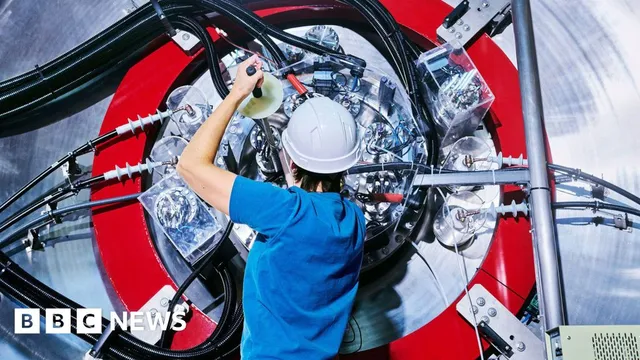
Trump Media ventures into fusion energy with $6 billion merger
Trump Media ventures into fusion energy with $6 billion merger
- Trump Media & Technology Group is merging with TAE Technologies, focusing on nuclear fusion energy.
- The deal, valued at over $6 billion, will create a publicly traded fusion company.
- This merger signals a strategic shift for Trump Media from media to energy sector involvement.
Story
In the United States, Trump Media & Technology Group (TMTG) announced a merger with TAE Technologies, a prominent fusion power company, in an all-stock deal exceeding $6 billion. The agreement signifies a significant shift for Trump Media, which is widely recognized for the Truth Social platform, as it expands into the energy sector. The merger enables both companies to own about 50% of the combined entity, allowing TMTG to utilize its financial resources and market access to accelerate the commercialization of TAE's fusion technology. Devin Nunes, former congressman and current CEO of TMTG, stated that this merger positions America for energy dominance while harnessing the potential of fusion power, which is hailed as a revolutionary energy breakthrough. TAE Technologies, known for its advancements in nuclear fusion, has secured over $1.3 billion in funding from renowned investors like Google and Goldman Sachs. Following the completion of the deal, it is anticipated that TMTG will contribute $200 million in cash, with an additional $100 million conditional upon the merger's regulatory approval. This union comes at a time when there is renewed interest in fusion energy as an alternative to traditional power sources. Fusion power promises to provide enormous energy output with minimal radioactive waste, making it a cleaner option than current methods. The merger is expected to forge one of the first publicly traded nuclear fusion companies, creating pathways for innovation in energy that could reshape the industry. Anticipating a closing date in mid-2026, both companies have signaled optimism toward overcoming technical challenges associated with nuclear fusion. As they prepare to embark on constructing the world’s first utility-scale fusion power plant, a collective strategic vision emerges aiming to mitigate energy scarcity concerns while ensuring national defense and economic stability in a rapidly evolving technological landscape. Nunes emphasized the importance of ensuring America stays ahead in the emergence of AI and energy production through this merger, solidifying both companies’ initiatives to tap into fusion technology's transformative potential.
Context
Nuclear fusion technology has long been regarded as the holy grail of clean energy due to its potential to provide abundant power with minimal environmental impact. Recent advancements in this field have brought us closer to realizing practical fusion energy solutions. The main development areas include advancements in plasma confinement methods, materials science, and experimental reactors. Organizations like the International Thermonuclear Experimental Reactor (ITER) project in France are at the forefront, aiming to demonstrate the viability of fusion energy on a commercial scale. ITER's design focuses on magnetic confinement, utilizing a tokamak reactor to sustain high-temperature plasma capable of achieving the conditions necessary for fusion to occur. With an ambitious timeline, ITER aims to produce first plasma by 2025 and evolve towards demonstrating a net positive energy output by the end of the decade, which is critical for future energy strategies worldwide. Another notable progress in fusion technology is being seen in private sector initiatives. Companies like Helion and TAE Technologies are exploring alternative fusion concepts using different approaches such as field-reversed configuration and magnetic fusion, respectively. These private entities are leveraging innovative technologies, including advanced computational methods and new materials, to create smaller, more efficient reactors that can potentially accelerate the timeline for achieving viable fusion energy. For instance, Helion's plan to produce electricity by 2024 signals a shift in dynamic within the energy sector, indicating a trend towards faster development cycles in fusion technologies. Material science plays a crucial role in the success of fusion technology, particularly in developing materials that can withstand the extreme conditions present in a fusion reactor. Research has intensified around the creation of advanced structural materials that can endure high temperatures and radiation levels without degrading. Innovations in nanotechnology and new alloy compositions are being explored to improve durability and performance under these conditions. The mission to design materials that can efficiently handle these demanding environments not only helps in sustaining plasma confinement but also extends the operational life of fusion reactors. Finally, while the technical challenges associated with nuclear fusion are formidable, the progress made by real-world experimental setups offers hope for the future of energy production. Fusion presents an opportunity to move beyond current challenges related to fossil fuels and traditional nuclear fission, focusing instead on a cleaner, safer energy source. Continued collaboration among research institutions, governments, and the private sector will be essential as we approach the next decade, making strides toward a sustainable fusion energy future. Harnessing this technology could lead to a revolutionary change in how we generate and consume energy, ensuring energy security while drastically reducing environmental impacts.


