
politics
controversial
provocative

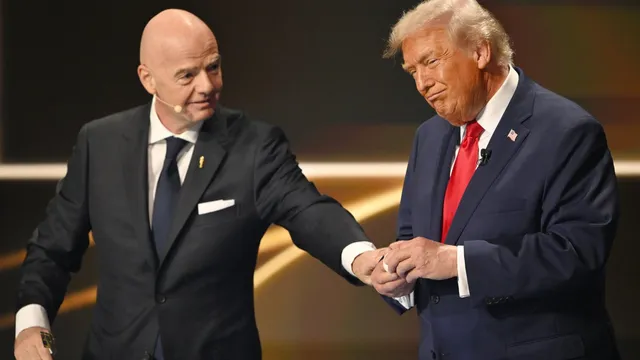
FIFA president's political ties spark ethics investigations

Dec 9, 2025, 7:43 PM20
(Update: Dec 10, 2025, 11:17 AM)
Swiss-Italian football administrator
international governing body of association football
president of the United States from 2017 to 2021

FIFA president's political ties spark ethics investigations

  • Human rights group FairSquare has filed complaints about Gianni Infantino's conduct regarding Donald Trump.
  • Infantino's actions coincide with the upcoming 2026 World Cup, raising ethical concerns about FIFA's neutrality.
  • If found guilty of breaching FIFA's ethics rules, Infantino could face serious consequences that undermine FIFA's credibility.
Share opinion
Tip: Add insight, not just a reaction
2

Story

In December 2025, FIFA president Gianni Infantino was criticized following the award of the inaugural FIFA Peace Prize to U.S. President Donald Trump during the 2026 World Cup draw held in Washington, D.C. Infantino's praise for Trump and support for his policies were met with backlash from human rights group FairSquare, which formally submitted complaints to FIFA's Ethics Committee. They alleged breaches of FIFA's duty to remain politically neutral, which is mandated by the organization's Code of Ethics. This process has raised concerns about the integrity of FIFA as it approaches one of its biggest tournaments. FairSquare's complaints specifically highlighted Infantino's public endorsements of Trump, which included advocating for Trump to receive the Nobel Peace Prize and expressing his admiration for the president as a political ally. Observers fear that such actions have the potential to erode trust in FIFA's commitment to neutrality and could jeopardize the organization's credibility among its member associations, players, and fans. These concerns have only intensified given FIFA's tarnished reputation from previous leadership controversies and governance issues. Moreover, the influence of Infantino's decisions may extend beyond ethical considerations; they could have lasting implications on FIFA's financial stability and organizational structure as it prepares for the 2026 World Cup co-hosted by the United States, Canada, and Mexico. The event is projected to generate significant revenue, and political endorsements may complicate FIFA's relationship with governments of the co-hosting nations as well as impact international perceptions. This controversy also raises questions regarding the independence of FIFA's Ethics Committee, as observers report that current ethics investigators may lack the autonomy seen in previous years. This is particularly concerning given FIFA's previous management struggles under former president Sepp Blatter. As the ongoing situation unfolds, FIFA will likely need to address these ethical challenges promptly to preserve its legitimacy and avoid further scrutiny during an already critical period in its history.

2026 All rights reserved
