
science
innovative
impactful

Chinese scientists create breakthrough system to extend organ preservation time

Mar 17, 2026, 8:04 AM10
(Update: Mar 17, 2026, 8:04 AM)
language group of the Sinitic languages

Chinese scientists create breakthrough system to extend organ preservation time

  • Chinese researchers created a Multithermic Machine Perfusion System that can preserve organs at sub-zero temperatures.
  • The system allows for organ preservation for up to seven days compared to the current maximum of only a few hours.
  • This breakthrough could significantly reduce transplant waiting lists and save more lives.
Share your opinion
1

Story

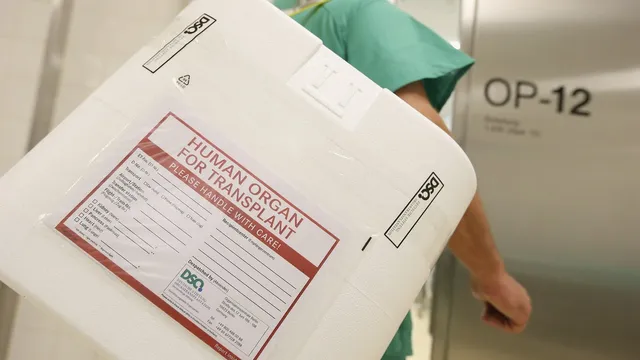
In recent months, a team of Chinese scientists at the State Key Laboratory of Cryogenic Science and Technology has achieved a significant advancement in organ preservation technology. Their research focused on developing a Multithermic Machine Perfusion System that operates at varying temperatures, including below freezing. This new system enables organs to be preserved in liquid nitrogen at minus 150 degrees Celsius for extended periods, up to seven days, which significantly contrasts with the current maximum viability of hours. Organ transplants are crucial for patients suffering from severe organ failure, and the urgency of this research stems from the immediate need to address the shortage of available donor organs. Traditionally, preservation methods involved keeping the organs in an ice-cold solution, which limited the time they could remain viable outside a donor. For instance, hearts typically last around six hours, while kidneys can survive for up to 24 hours. This limitation complicates the logistics of organ transplants and often results in many viable organs being discarded. The introduction of machine perfusion systems, while a step forward, still faced challenges like temperature constraints and complications associated with devices not suited for subzero temperatures. The Multithermic Machine Perfusion System represents a cutting-edge innovation designed specifically to address these limitations, offering programmable control over temperature, pressure, and flow rate across a broad range of conditions. In laboratory trials, this system has successfully preserved hearts and kidneys from various animals for days and allowed the researchers to revive and transplant them without deterioration. This new method is expected to redefine organ preservation standards, giving hospitals a more reliable means to manage organ transplants effectively. As a result of these advancements, researchers anticipate the possibility of alleviating the organ transplant waiting lists significantly. It is projected that if even a portion of currently discarded organs could be preserved effectively, the backlog could be resolved within a few years. There is hope that by extending the preservation time, particularly for the heart to 24 hours, patients awaiting transplants could have increased access to viable organs, ultimately saving lives and enhancing transplant outcomes.

Context

Recent advancements in organ transplant technology have revolutionized the field, significantly improving outcomes for patients requiring transplants. Notably, the development of organ preservation techniques has played a crucial role in extending the viability of donated organs. Techniques such as machine perfusion, which involves the use of a device to restore blood flow and oxygen to the organ, have shown promising results. These devices help maintain organ function and reduce the risk of damage during storage, thus increasing the chances of successful transplantation. Additionally, the use of cold storage solutions, which enhance preservation time, has also allowed for a greater geographical distribution of organs, making it easier to match donors with recipients across larger distances. Another key advancement is the progress made in xenotransplantation, where organs from genetically modified animals are used to address the shortage of human donors. Researchers have made significant strides in modifying pig organs to reduce rejection rates in human recipients. These advancements are crucial in overcoming the critical shortage of available human organs for transplantation. The combination of advanced genetic technologies and immunosuppressive therapies is paving the way toward a viable solution for patients who face long waiting times for organ transplants. Furthermore, the integration of artificial intelligence (AI) and machine learning into organ transplant technology has begun to reshape the landscape of donor-recipient matching. AI algorithms can analyze vast amounts of data to predict outcomes for potential transplant recipients, thereby improving the selection process for donors. Machine learning models take into account a multitude of factors, including medical history, immunological compatibility, and previous transplantation outcomes, leading to more personalized and effective matches. This data-driven approach paves the way for better success rates and a more efficient transplant system overall. Lastly, the cultivation of organs using bioengineering technologies has garnered attention as a potential future direction for organ transplant. Innovations in 3D printing and scaffolding techniques are on the verge of allowing the regeneration of tissues and entire organs, which may one day eliminate the need for donor organs altogether. Early experiments have demonstrated the feasibility of printing simple organ structures, and while challenges remain in replicating complex organ functions, the potential for fully functional bioengineered organs holds immense promise. Collectively, these advancements underscore the dynamic evolution of organ transplant technology, aiming to save more lives and enhance the quality of life for patients around the globe.

2026 All rights reserved
